Fashion trendsetters we are not. Some of us wear clothing that was donated by others partly because it was no longer in style. We take what we can get.
Nor do we start trends of electronics technology. Most of us are satisfied with the basics, or none at all.
Most of us are not at all interested in keeping up with the trends that others indulge in.
Yet, somehow, we inadvertently started a culinary trend that we probably should have kept as our secret.
Black elderberry had already become a culinary and medicinal fad. It started with medicinal black elderberry products, such as herbal extracts and tinctures, to stimulate the immune system. From there, black elderberry tea, syrup, candy and (cooked) juice were popularized as more culinarily appealing options for exploiting the health benefits of this rediscovered fruit. Even old fashioned products made from the flowers became trendy.
All the while, the black elderberries that these products were made from came almost exclusively from eastern North America and Europe, within or somewhere close to regions that they are naturally native to. Black elderberry plants that are grown for fruit production are quarantined from import into California.
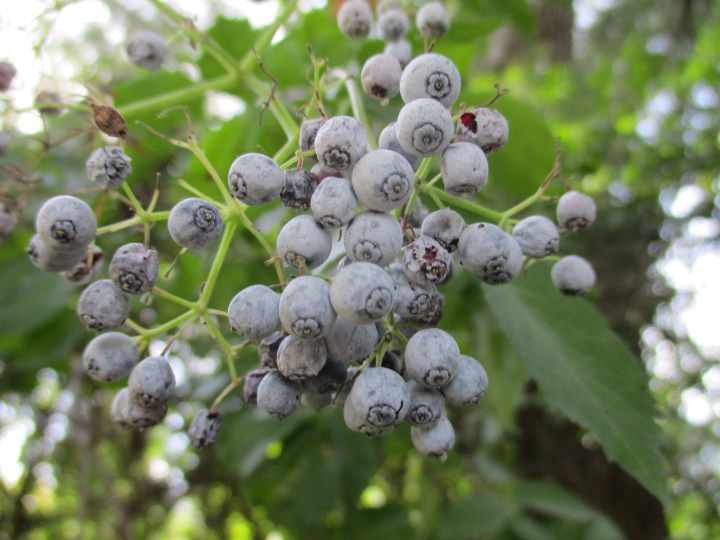
No one seemed to notice the native blue elderberries that grow wild here. Well, no one noticed until our blue elderberry jelly started wining ribbons annually at the Jelly & Jam Competition of the Santa Cruz Mountains Harvest Festival several years ago. Winning ribbons was no big deal when there were only a few entries, but it did bring attention to the formerly ignored native blue elderberries.
Suddenly, blue elderberries are getting harvested so thoroughly that it is not so easy to get enough to make jelly for the Jelly & Jam Competition this autumn. Besides jelly, people are making syrup, wine and even a distilled brandy like concoction from them. We can only hope that fermentation of the wine denatures the toxins of the raw juice like cooking does. (Raw elderberries are toxic.)
Those who had invited some of us to collect berries from their properties in the past are finding that the berries are getting collected by neighbors before we can get to them. After seeing the berries ignored for as long as anyone can remember, the neighbors are not likely aware that blue elderberries are now in demand. Fortunately, we have multiple sources, and we do not need many.





 Felton League