A New Surplus

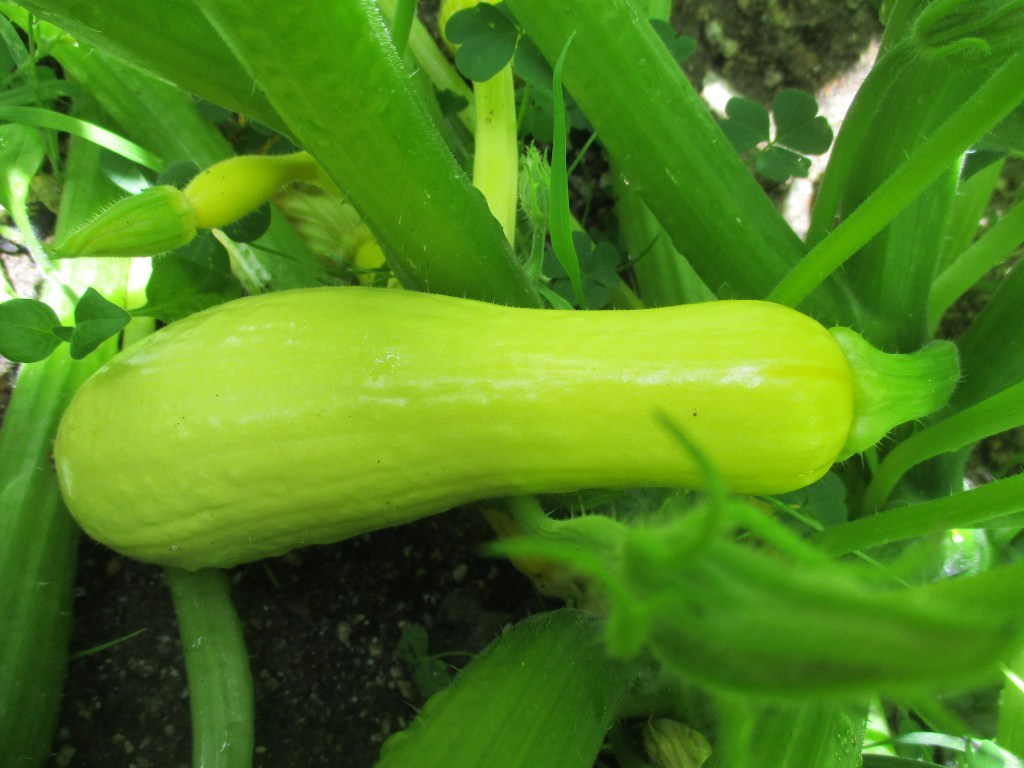
Yellow summer squash is almost as abundant as zucchini.

Felton is certainly no place to go hungry in. The generosity here can be a bit overwhelming at times. Surplus of perishable food that must be frozen almost exceeds the capacity of the freezers that we use. Some of the non perishable food gets transferred to a somewhat well stocked pantry where it is shared with anyone in the Community who wants it, regardless of need.

Food distribution between 11:00 and noon on Thursday at Community Bridges still helps by providing more variety of food, but what is procured is shared amongst more significant groups. Some of us take what we get to share with those we work with, because some have not been working as much as they typically do lately. Nonetheless, there is still sometimes a bit of surplus.

Now, there is about to be a little bit more. The vegetable plants that some of us started in various small garden plots have been producing a few minor vegetables, and are just about to start producing more significantly. Even vegetable plants that got started late are catching up with a normal schedule now that days are longer and the weather is warming. It is that time of year.

Frequent harvest of zucchini promotes continual production.

Unfortunately, there could be a slight increase in the need for this minor bit of surplus at about the same time that it becomes available. So many in the Community who rely on tourism and associated industries for revenue will be earning less than normal during what should be the busiest season. Although more can return to work now, fewer tourists can afford to spend much.

Diminished revenue limits any expenditure on the necessities of life. A few of those who are so very generous to us might now benefit from the minor surplus that they helped us to generate.
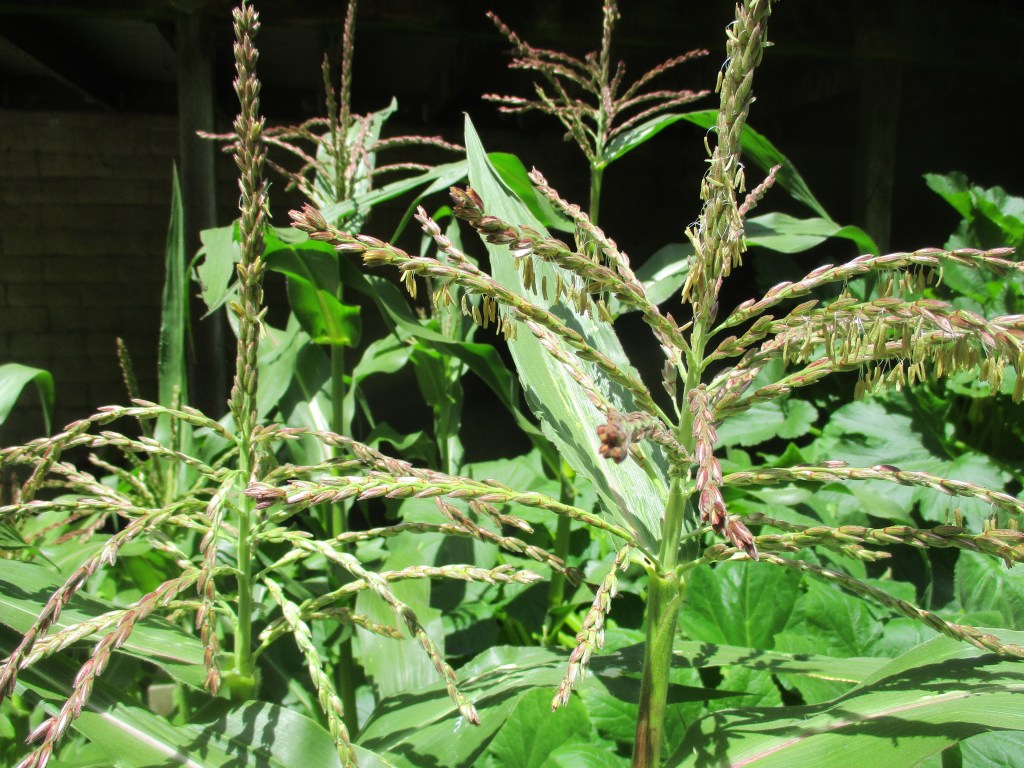
To enhance production, a few bits of corn tassel will get snipped to dust the silks.

Discrimination of Discrimination

Civilization has always been been influenced by various forms of discrimination. Even in modern America, where we like to believe that most types of discrimination have been dispelled, we are regularly reminded that some of the worst remain. Some forms of discrimination get recycled and reassigned, as if they will be more tolerable if applied to more appropriate victims.

Society can be rather discriminating about who it discriminates against.

People of African descent have always been discriminated against in America. Racists who justify such discrimination might consider them collectively to be more innately prone to thievery, as well as violence, vandalism, addiction, exploitation of social services, and any other social transgression that imaginative racists can conceive. It is what justifies racism and discrimination.

Historically, people of Asian descent, particularly Chinese descent, were collectively considered by racists to be more innately prone to addiction (to opium), as well as thievery and squalorly lifestyles. For a disgraceful period of American history, people of Japanese descent were incarcerated merely because they were racially related to enemies of America during World War II.

Many racists still consider Indigenous People of North America to collectively be more innately prone to alcoholism, as well as the many other transgressions that people of African and Asian descent are similarly blamed for. It is a common and typical pattern of racism and discrimination. Behavior that should be attributed to environment is instead attributed to genetics, or race.

It is easy enough to find pictures or other documentation of people conforming to the stereotypes of their respective racial designation. ‘Nature versus Nurture’ need not be mentioned if the objective is to justify racism and discrimination; although disproportionate conformation typically is mentioned. Justification of racism and discrimination rarely involves the use of any logic.

Now that racial discrimination is very slowly becoming less socially acceptable among common American society, some of those who might otherwise be racist are directing more unfounded hostility to other groups, such as those who are wealthier or more impoverished, including the homeless. Because this sort of discrimination is not racist, society is slightly more tolerant of it.

However, modern American society is realizing that unfounded discrimination against some of the homeless is merely a different flavor of the same recycled racial discrimination that is now so stigmatized. The irrational hostility and lack of logic eventually make it obvious. We have seen it all before, continue to see it, and sometimes see it in initially unrecognizable incarnations.

Consider The Source

While most of us are willing to comply with social distancing standards, a few complain vehemently about it. Of these, some blame President Trump for the current situation. Some blame the Liberals. Some insist that it is a conspiracy to destroy the economy. Yet, they all lack the education and experience of those who developed and implemented the social distancing standards.

In other words, they do not know what they are talking about, but they all think that they are experts.

Understandably, many of us want to return to work! Many are frustrated by confinement and want to get out and about like we did prior to this situation. The rational among us do what we must until that is again possible. The irrational sort can potentially prolong this situation by noncompliance to social distancing standards. Society suffers the consequences of their ignorance.

The ignorance of those who lack practical experience with homelessness, but believe that they are qualified to make recommendations about it, is just as irrational. Although such ignorance is rare, we all have encountered it at one time or another. Those who express the most extreme of ignorance and irrationality are too ignorant and irrational to realize it. Consider the source.

For example, some have made the recommendation that homeless people should just relocate to where they would not be homeless, but do not reveal where such a place is. Some homeless people do relocate for a home that happens to be available. It would however be pointless to relocate to be homeless in an unfamiliar situation. Nor should anyone relocate to be unemployed.

How many of those who make such trivializing recommendation had been homeless, and tried to find a home without a deposit, exemplary credit, sufficient income or stable renting history? How many are even aware that many of the homeless lack a combination of these assets? What qualifies anyone lacking such relevant experience or insight to make such recommendations?

It was the best of times. It was the worst of times.

Dedication of the Steven Michael Ralls Memorial Tree on May 2 brought back memories. That should probably be expected from a memorial. However, the tree is new. The site of the dedication is what we remembered. It was a campsite where Steven temporarily lived while homeless in the autumn of 2012. It has changed significantly since then, but is still recognizable.

Homelessness is generally not a preferred alternative to a domestic lifestyle, at least within local cultures and societies. Otherwise, more of us would be homeless. Those who are experienced with homelessness would not recommend it to those who are not. There are just too many advantages associated with domestic lifestyles. Homelessness is just too challenging and arduous.

Yet, at the Dedication of the Steven Michael Ralls Memorial Tree, we remembered many of the pleasant experiences associated with Steven’s former campsite back in the autumn of 2012. Homelessness really is challenging and arduous, and can be downright oppressive, but it does not necessarily deprive those who experience it of all opportunities to also experience pleasure.

Homelessness can be incredibly enlightening. It can expose the best and worst of humanity; and just might demonstrate how some of the worst is not as bad as it is commonly believed to be. Homelessness is certainly an adventure, which compels participants to formerly unrealized resourcefulness. It really can be the best of times, right in the middle of the worst chapter of life.

It is worth considering that anyone can attend a concert of the Oakland Symphony, and thousands do; but very few were privileged to attend intimate and exclusive solo concerts by Steven Michael Ralls with his tired old guitar, at his dusty campsite where his Memorial Tree was recently installed. Those uniquely privileged few are among the more fortunate of our Community.

Steven Michael Ralls Memorial Tree

Steven Michael Ralls Memorial Tree is happy in its new home.

Steven Michel Ralls was memorialized by the installation of his own Steven Michael Ralls Memorial Tree this morning on the third anniversary of his passing. Several circumstances coincided to make this event not only possible, but righteously appropriate, much like the original Memorial Tree that replaced a conspicuously missing oak in Felton Covered Bridge Park.

This little Monterey cypress, Cupressus macrocarpa, grew from seed into a situation where it could not stay. Initially, there was no place to relocate it to, since it will eventually get too big and too shady for most landscapes. Ironically, these disadvantages are attributes where it is now situated, at the end of where a row of other cypress will be installed to obscure unappealing scenery.

The location is perfect! It is offset from the adjoining straight row of five Arizona cypress, where it can get bigger and broader than the others, as it naturally does. A larger and bulkier tree is preferred there to compensate for a slightly lower elevation. What is even more ideal about the location is that it is precisely where Steven Michael Ralls camped while homeless late in 2012.

Steven Michael Ralls did not live there for long, before relocating to comfortable homes in Murphys, and ultimately Aptos. The site has change significantly since then. The upper portion has been buried by excavation for the expansion of the adjacent utility yard that the cypress are intended to obscure. A perimeter fence was installed around the yard. Vegetation is diminished.

It was gratifying to install the new Steven Michael Ralls Memorial Tree this morning. It will need to be irrigated occasionally by bucket through summer, but will need nothing after the rain starts next autumn. It knows how to grow up fast to become a big and prominent asset to the forest.

Another Memorial Tree

There are big plans for this little tree.

Felton will be getting another Memorial Tree next Saturday. Unlike our small Memorial Tree valley oak in Felton Covered Bridge Park, which is a Memorial Tree of several people, among several other Memorial Tree redwoods, this new Memorial Tree will be for a specific person, in a specific locale. It will be planted on May 2, which is the anniversary of the deceased’s death.

The little tree is a Monterey cypress, Cupressus macrocarpa, that grew from a self sown seed too close to a building, and within a landscape that it could not have stayed in. When pulled out of the ground last autumn, it came up with an intact root system. It was too exemplary of a specimen to discard. It instead got canned, recovered through winter, and is now starting to grow.

Monterey cypress is endemic to a very confined range on the coast of Monterey County, between Point Cypress and Pescadero Point, and on Point Lobos. However, it is naturalized where it had been planted locally, which is why this particular specimen grew where it could not stay. It should be happy where it will be planted, and has plenty of space to grow as big as it wants to.

Ideally, this little tree should have been planted directly into the new location immediately after it was removed from its original location. It could have settled in through winter, to be ready to resume growth now. Since it is instead being planted now, it will need to be watered occasionally until rain resumes next autumn. Once established, it will need no supplemental irrigation.

Although not horticulturally ideal, delaying the planting until May 2 is very appropriate. The location of planting also just happens to be very appropriate. The appropriateness of it all will be explained next Saturday.

No Vacation

Some have said that those who ridicule the homeless should try being homeless. I disagree. For several reasons, I do not believe that any more people than absolutely necessary should ever attempt homelessness. As long as someone who is homeless would prefer to be sheltered, there is more homelessness than there should be. This is something that society needs no more of.

There really is no way to ‘try’ homelessness anyway. Someone is either homeless or not. Spending a night under a bridge without losing the security of a home to return to afterward will by no means makes someone an expert. Spending a few or several nights under a bridge might provide more insight into the basics of such a lifestyle, but is still no substitute for the real thing.

Homelessness in no vacation. Otherwise, it would be more popular. Backpacking and camping are popular only because those who do it start out well outfitted, and get to go home afterward. Traveling to places far away from home is popular too, but is preferably done with even more than the comforts of home. Someone who vacations in Paris is no more homeless than Parisian.

Those who are inexperienced with homelessness are fortunate. Hopefully, none of them will ever need to experience it nearly as intimately as a tourist experiences Paris. Those who are so deficient of civility and compassion for humanity as to ridicule or otherwise express unfounded disdain for all collective homeless people should instead be examining their own inadequacies.

That seems to be a common theme. Those who complain the most have the most to complain about. Even if it were possible to ‘try’ homelessness, doing so would not provide much practical insight for those unwilling to use it, who are so intent on contempt of others.

“STAY AT HOME”

The font of the sermonette on the other side is too small to get a good picture of.

That is an order! . . . but not just any order. It is an official California State Order. Most of us have been doing rather well with it from the onset. Many of us are unable to go to work anyway. We might be catching up on some of the many chores we have been neglecting, and maybe wondering how to pay the bills if our income stops. It is a uniquely troubling time, to say the least.

What about those of us who lack homes? Avoidance of others is facilitated by so many others staying at home where they belong. Otherwise, social distancing is the best we can do. Even that is quite difficult for those who live in very close proximity to others in the same situation. Because of the trouble of storing what we need, we must shop for food more frequently than others.

Larger Communities, such as Santa Cruz, are attempting to shelter more of those who lack shelter, particularly those who are classified as ‘high risk’. Hotels should be commended for their cooperation with this endeavor, and for providing uncrowded individual accommodations to the elderly! Many prefer to avoid crowded shelters where practical social distancing is impossible.

Lunches at both Felton Presbyterian Church and Saint John’s Catholic Church can not be served to our significant groups, although Felton Presbyterian Church continues to provide bagged individual lunches. As their flier in the picture above indicates, showers at Felton Presbyterian Church have been canceled. Fortunately, we have other meager resources, and adequate food.

We know how to work with limited assets.

News is confusing. We all know why it is so very important now though. There is no need to say so. Nor must we read about it in the flier above. There are plenty of other credible resources.

Actually, the font is not all that bad.

Better Homeless Gardens

‘Better Homes & Gardens’ appeals to those with homes and perhaps associated gardens that are, well . . . better. It also appeals to those of us who would prefer our homes and gardens to be better than they presently are. Those of us who lack home or garden space are likely more concerned with basic survival than the latest fads and trends of contemporary domestic lifestyles.

Of course, that does not dictate that none of us are interested in domestic issues or gardening. Every one of us has lived in a home at one time or another, and intends to do so again. Many of us have likewise enjoyed gardening, and intend to do so again. In fact, a few of us presently enjoy gardening without our own garden spaces. Some of our gardens are remarkably productive!

Garden spaces are are not as difficult to procure as domestic situations are. Some of us who reside in homes but do not enjoy gardening are pleased for others to utilize some of our otherwise unused garden space, rather than allow it to remain fallow. Some even consider the cost of water consumed by a garden to be worth the incidental management of unwanted wild vegetation.

This happens to be the time of year for warm season vegetables to get started for summer and into autumn. None of us really need to grow any vegetables. We have access to more than we need from food distribution and donations. We just enjoy growing a few vegetables that are not commonly provided by the typical sources, such as tomatoes, green beans, peas and corn.

Some of us just enjoy gardening for the sake of gardening, and share the vegetables, fruits and even a few flowers with anyone in the Community who appreciates the produce.

Writer’s Block

It is now getting late on Sunday night. Nothing is written for this week yet. It will be a stretch to get these next few paragraphs written and posted before midnight.

I can formulate all sorts of excuses for my very late start. I really am ridiculously busy. However, the real reason for the difficulty of writing something for this week is very literally not very interesting. There are literally not many interesting topics to write about.

The weather is excellent.

Everyone is getting enough to eat.

Many of us who formerly lacked homes have procured habitation.

Many of us who had been unemployed have procured employment.

The Community is amazingly generous and supportive.

Even our pet companions have it pretty good.

This is getting to be redundant. I have repeated some of this information a few times in the past several months. The good news is that this is all good news. The bad news is that it is not very interesting after reading about if a few times.

In the past, there had been more interesting bad news to write about. It is scarce now.

Some have recommended that I write more about homeless culture and society. Some have expressed interest in brief biographies of members of the homeless Community. Such topics are not so easy to write about without compromising the privacy of those involved.

For a blog that evolved from a social network that originally exposed unfounded persecution and discrimination of the homeless, a lack of subjects to write about is a good thing.

I suspect that there will be a few new pleasant topics to write about this year. It is still too early to discuss some of those topics. It is not easy to wait for them.

Now, I will post this before midnight.