Frio de Ausencia

‘Cold of Absence’. That is the direct translation. Is sounds prettier in Spanish, perhaps alluringly exotic. In reality, it is a sad song of unrequited love, composed by Gali Galeano of Columbia in 1981. I knew none of that until I looked it up online a moment ago. I knew ‘Frio de Ausencia’ only as the name of a tired old Chevrolet on a farm I worked on after I graduated high school.

No one knows why it was named ‘Frio de Ausencia’. I asked. The name was painted in black letters across the front of the gray hood. It makes no more sense to me all these years later than it did then. I do miss it though. It was such a simple and somehow stylish old pickup, at a time when contemporary vehicles innately lacked such qualities. It did anything we needed it to do.

I went off to college and never saw Frio de Ausencia again. A young man whom I worked with, who was a few years older than I was at the time, took it with him when he relocated to Gilroy. Everyone else I worked with there that summer is now deceased. The farm was developed into a tract of homes, where many more people are now enjoying their respective place and time.

In this place and time, here and now, absence is something we often notice. It is not necessarily cold though. Over the years, some of us have relocated for employment or more comfortable domestic situations. Some of us who are still here are too busy with resumption of careers and domestic lifestyles to socialize like we did when we lacked to some degree in such obligations.

As much as we might miss our friends, and notice their absence, it is gratifying to know that they are generally much happier and healthier than they were before improving their respective situations. Such absence is a tolerable consequence of progress. As silly as it might seem to those unfamiliar with our society, we would rather notice their absence than enjoy their presence.

Apologies for the delay of posting an article this week. It became necessary to postpone the topic I started writing about.

Rainy Season

The first storm since spring left more than an inch and a half of rain by the time the sun came up on Wednesday morning. Rain that started with the second storm that arrived this morning, and is still falling as I write this, is expected to continue through Monday, followed by showers through the foreseeable forecast. The dry summer is over. It is now officially the rainy season.

Are we concerned about those lacking adequate shelter? Well, of course we are. It is terribly uncomfortable and potentially dangerous to be out in the weather when the weather is like this. Those who live out in forested areas are vulnerable to falling limbs and trees, as well as potential flooding. While cold and wet, it is more difficult to recover from illness, or just avoid illness.

However, the situation is not as bad as it could be, or as bad as it was years ago, when there were many more of us without homes, and lacking resources. This season, there are fewer of us lacking shelter than there have been in a very long time. The same resources that have always been available are still there for those who need them. More of us have resources of our own.

We must still watch out for each other. This is just the beginning of what will become a more difficult rainy season. When it does not rain, it will likely be cold. That is just how weather works. At least we happen to live in a relatively temperate climate. It does not get as rainy as Western Washington, or as cold as Minnesota. We will get through it as well as we somehow always do.

Perhaps, this year, we will get through the rainy season even better than we typically do.

Misconceptions – Homelessness Is A Growing Problem

Homelessness in America has been increasing very slightly for the past three years. It has been increasing in parts of California for a bit longer, and at a slightly more accelerated rate. More substantial increases are concentrated mostly in urban regions, particularly Los Angeles, San Diego, San Jose and San Francisco. Homelessness really is a growing problem, at least for now.

However, for the decade prior to the the relatively recent increase that began only three years ago, homelessness had been decreasing at a substantial rate. Furthermore, the substantially increasing rates of homelessness in urban regions of California are sufficiently offset by decreasing rates in suburban and rural areas, to average out to only a minimal increase for the state.

This is not about homelessness in all of America though. Nor is it about homelessness in the rest of California. Here in Felton, the rate of homelessness has decreased significantly in the past seven years since 2012. Only a few people became homeless here during that time, and most of those were not homeless long. Several more who had been homeless have since found homes.

So, why do haters so regularly and predictably complain that homelessness is a growing problem in Felton? Well, that is part of what they do. They perpetuate false information intended to vilify their targeted victims, and exaggerate any innate problems associated with them. They strive to be a divisive force within an otherwise remarkably cohesive and inclusive Community.

No verifiable statistical information is necessary for a hater to claim that homelessness is a growing problem in Felton. Conversely, any observant and sensible person can plainly see that it is not. If homelessness really had been a growing problem since 2012, there would be more homeless people in town rather than less. It is that simple.

Misconceptions – Immigration

‘Misconceptions’ could become another category for this blog, like ‘Hypocrisy’. There is quite a bit to write about that could be categorized as such. It would be more relevant and interesting than the ‘Hypocrisy’ category, especially if the ‘Hypocrisy’ category is eventually deleted, as has been suggested. Furthermore, ‘Misconceptions’ would be less objectionable than ‘Hypocrisy’.

‘Immigration’, for example, is an interesting topic that is unobjectionably relevant to homelessness, but only because of the misconception that most homeless people here immigrated with the intention of being homeless. This misconception is obviously perpetuated by those who are not very acquainted with homeless people, particularly the local homeless residents of Felton.

There are certainly more homeless people in California than elsewhere. There should be. There are more people of all sorts in California than elsewhere. California is the most populous state. Because real estate here is more expensive than all but only a few other places in America, a disproportionate ratio of those who live and earn income here can not afford a mortgage or rent.

Most homeless people in California lived here while they were not homeless. They payed mortgages and property taxes or rent just like anyone who lives in a home. Some payed significantly more than average. Most had gainful careers here. Some raised families here. Sadly, some who are homeless are in the process of raising their families. Some have never lived anywhere else.

Of the few homeless people presently in Felton, only one immigrated from outside California less than a decade ago, early in 2013. Only one immigrated from outside America, but did so for work in the early 1990s. All others are Californian, and have been in Felton for many years. More than half are native to the San Lorenzo Valley. More than half formerly owned homes.

Thesaurus

Those of us who write sometime find a thesaurus to be useful for suggesting synonyms, euphemisms or similar alternatives to words that we are trying to avoid the use of. Synonyms might be useful to avert the redundancy of using a particular prominent word a few times in a single paragraph. Euphemisms might be less objectionable synonymous options to unpleasant words.

A thesaurus does not directly define words like a dictionary does, but by providing words of similar meanings, a thesaurus indirectly demonstrates how words are perceived by society. Such perceptions may be significantly different from actual definitions. Some may be completely inaccurate. Some synonyms, whether accurate or not, are potentially objectionable dysphemisms.

A comment in one of the newspapers I work for in Southern California described those who lived in homes destroyed by the Getty Fire as ‘outside the gates’. It took me a while to determine that this is a polite way of saying that they are homeless. To me, it seems to be more exclusionary than polite, but I have never tried the phrase. It prompted me to inquire with a thesaurus.

‘Homeless’ was the basic word I inquired the thesaurus about. Some alternatives are actually phrases that are too cumbersome to substitute for a single word.

“houseless, unhoused, displaced, unplaced, unestablished, unsettled” are simple euphemisms. Some of us are familiar with the first few.

“wandering, itinerant, vagabond, vagrant” are words that describe those who are transient, so do not apply to any of us who live here.

“destitute, estranged, desolate” could be accurate for some of us, although not contingent of homelessness. The last one seems . . . odd.

“derelict” seems to be more relevant to a carcass of an old Pontiac.

“disinherited, dispossessed” are more relevant to relationships with family and friends than a domestic situation.

“exiled, banished, outcast”?! We are not political refugees! (Okay, one of us is.)

“unwelcome, forsaken, friendless, uncared-for”?! How are these words even relevant to our respective domestic situations? Furthermore, how can any homeless (or houseless or unhoused or displaced or . . . ) person experience any of this here in our remarkably welcoming and caring Community of friends in Felton?!

Chili Cook Off

The Sixth Annual San Lorenzo Valley Chili Cook Off yesterday at Felton Covered Bridge Park was a fund raiser hosted by Felton Library Friends to benefit the new Felton Library and Nature Discovery Park. That is why tasting kits that were needed to participate were sold for $5. All of those $5 charges were collectively the funds that the fund raiser raised.

Of course, there was much more to it than that. No one would have attended if it was just about collecting funds. It was about a good time, with food, beverages and live music. A dozen or so chili chefs competed for prizes. Local business donated even more prizes for a raffle later in the day.

Contestants, volunteers and just about everyone who attends such events knows how to have a good time. $5 is a trivial charge to participate. Not many who pay put much though into it as contribution to fund raising. Procurement of resources for the Felton Library and Nature Discovery Park is very important, but so is doing the event right.

For several, doing the event right entailed including those who had neither the intention of participating, nor the minimal resources to do so. They delivered several and various bowls of chili to a few of us who were gathered at the picnic table closest to the parking lot. That is being seriously Community oriented!

I know this is not the best picture of a bunch of empty bowls and a few that I snatched from those who were still eating out of them, but it shows the variety of the chili. These were not contributed by one chef who wanted to lighten his load of leftovers, but from at least six different chefs. There were more empty bowls that had already been discarded.

Workday – October 19, 2019

Saturday – October 19 – 9:00 a.m. to noon – Felton Presbyterian Church – WORKDAY

This is no venue for social networking, and it is unlikely that more than a few of us will see this post prior to Saturday anyway, but I want to at least briefly mention the workday cited above. I would have mentioned it sooner, but was just informed of it a few hours ago. It is only for three hours, but we always get quite a bit done before noon.

Although it is still early in the season, I intend to FINALLY prune the flowering crabapple out front, so could use some help to drag brush. Otherwise, the big cypress trees north of the parking lot, near A&W, need some major grooming. That is a big job that can not be finished before noon, but it would be nice to remove the lower growth that is encroaching into parking spaces. Of course, there is plenty of other work that needs to be done.

Audience

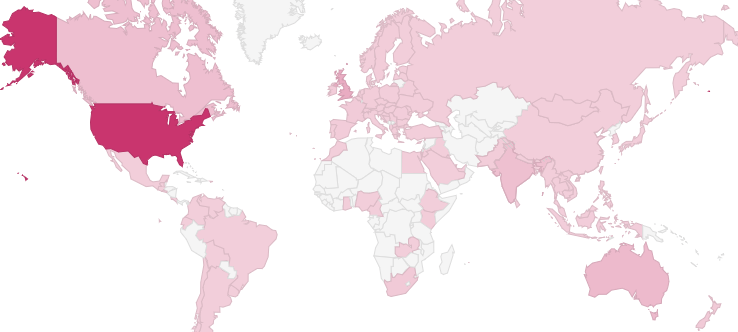
Why is someone in Ecuador reading about us? What about France? Did they just come here expecting to find information about Tom Felton who acted as Draco Malfoy of those creepy Harry Potter movies? There is certainly no problem with anyone reading what they want to on the internet. It just seems odd that there are others outside our Community who take interest in us.

Do any of us know much, or anything at all, about others like us in the Philippines? What about those in Nigeria? Do we read about others like us in other regions of California? How are they like us? How are they different? There are many variables, such as culture, climate, resources and government. Some may be in better situations than we are in. It is likely worse for most.

Ironically, we become less interesting as our situations improve. Those coming here for insight into our unique lifestyles will find less to read about as our individual lifestyles become less . . . unique. So many of us have regained domestic lifestyles and gainful employment during the past few years that there are only a few of us who still need to do so. That is not very interesting.

What is almost as good as a lack of interesting issues within our own group, is a lack of drama from outside. Hate groups are being recognized for what they are, and are alienating associates.

In this regard, boring is good. We know that things change, and that there will always be new issues developing. For now, we should just appreciate the slow but steady improvement, while new issues develop slightly slower than old issues get resolved. Perhaps our episodic improvements and good news are rare commodities that some of our audience come here to read about.

Too Much Of A Good Thing

Generosity is a good thing. There happens to be an abundance of it here. In conjunction with the many other good things about our Community, the abundant generosity is what keeps a few of us from going hungry. Those who might happen to get into a bad situation several days before food distribution can easily find other meal and food programs nearby to stay well fed.

Sometimes, food even gets left for us at the picnic table near the parking lot at Felton Covered Bridge Park. Some of it is surplus from earlier events in the park, such as a birthday party or a picnic. On rare occasion, surplus food is delivered from events somewhere else, such as a wedding reception or a staff meeting. People actually go ‘that’ out of their way to share surplus food!

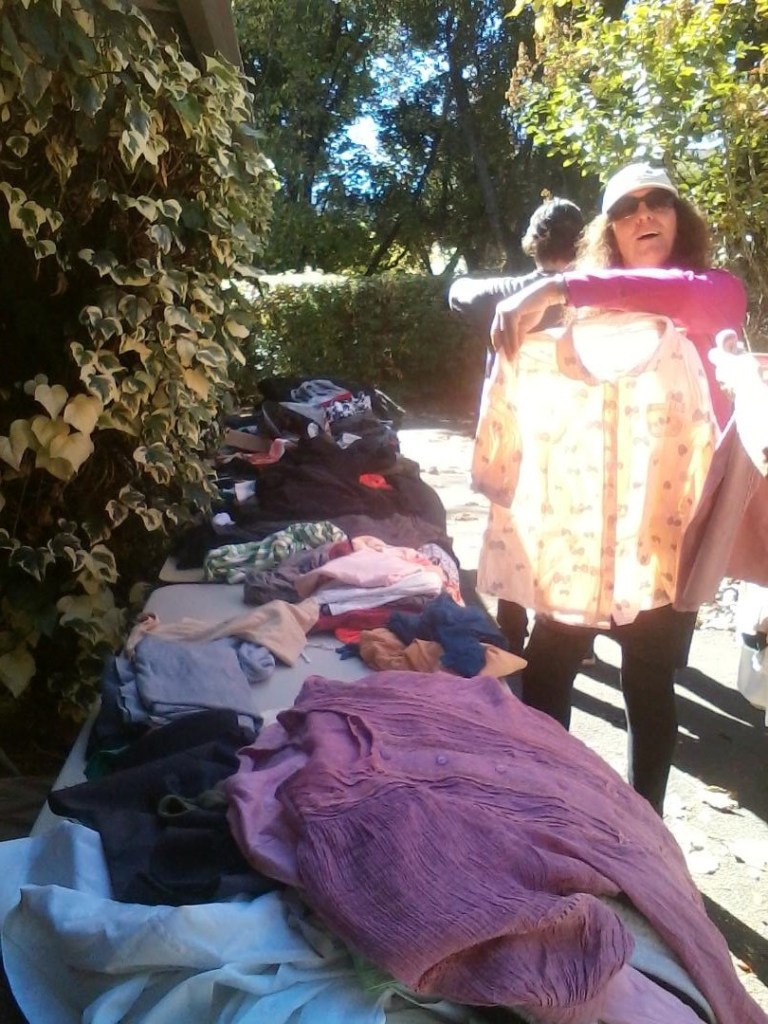
Generosity is certainly nothing new here. I wrote about it not too long ago. It sometimes involves other minor resources besides food, including clothing, bedding, tents, kitchen utensils, fuel, pet supplies, tarps, and on rare occasion, employment and housing opportunities. If too abundant, some of the non-perishable items can be stored until until someone has need for them.

Surplus perishable food that is not consumed in a timely manner is not so easy to accommodate. If we get to it quickly enough, some can be taken by those who can freeze or refrigerate it for later. Regardless of what happens to it, perishable food left in Felton Covered Bridge Park must be taken before wildlife makes a mess of it. Fortunately, so far, that has not been a problem.

However, there is slight but well founded concern that with such generosity and abundance of surplus, but fewer of us to benefit from it, there might eventually be potential for contributions of perishable food to attract undesirable wildlife. Ravens are notorious for taking unattended food, and leaving the wrappings strewn about. Raccoons and rats take what remains overnight.

Within the context of the collective ecosystem, scavenging surplus food is probably not a problem for the wildlife. The remaining mess of wrappings, and the waste of such graciously shared surplus, are the potential problems. Since the surplus food is being left for us, we must be attentive to how it might affect the environment, and not allow it to become a problem for others.

There certainly was no problem with this surplus food that was left early today. The fancy dried apricots and shelled walnuts to the right were quite a score. The sandwiches to the upper left were timely for lunch. Someone later brought salami and cheese to go with the remaining mixed crackers that were snacked on by many. Generosity and abundance go a long way in Felton.