Live In Fear IV

This is becoming too much like a miniseries. To disrupt the monotony, we could consider the alternative to choosing to living in fear. After all, that is what most people prefer to do. They appreciate the Community in which we live. The climate and scenery are certainly assets also. Actually, there are many reasons why we live where we do. There are a few unpleasantries that occasionally instill major fear, such as the CZU Fire, the Loma Prieta Earthquake and the Love Creek Mudslide; but most of us prefer to fear them only when justified.

Society is certainly not perfect. That applies everywhere. There is always some degree of social problems such as crime, mental illness and homelessness. Few choose to live in fear of these imperfections. Most prefer to enjoy their particular society, and contend with social problems only as necessary. Precautionary measures, such as home security systems, are not necessarily indications of irrational fear, but are generally employed by those who prefer to be less concerned with undeniably present social problems.

Society certainly should not be completely derided for its innate imperfections. It is more than redeemed by its assets. Otherwise, people would not want to live in societies or Communities such as ours. To the contrary, most people in most Communities believe that their respective Community is the best of all, simply because they would prefer no other. That is likely how it should be, in a Community in which most choose to not live in fear.

Those with the least, particularly those lacking a domestic situation (the unhoused), can attest to how exemplary our local Community is. The graciousness and generosity exhibited here is astounding. It is understandable that so many of us believe that this is the best Community in which to live and participate.
Live In Fear III

As mentioned last week, “Those who choose to live in unrealistic or unjustified fear seem to be rather deficient of common logic.” This is exacerbated by their ignorance of such deficiency, or worse, by their innate but unfounded belief that they are somehow more logical than others of the Community.

For example, many of those who choose to live in unrealistic or unjustified fear want all homeless encampments to be demolished without a plan for those who would be displaced by such demolition. They simply do not understand how important planning is, or that a lack of planning is contrary to the intended results of the unplanned demolition that they want.

No one wants homeless encampments within the Community. Those who inhabit such encampments, including the few who do not require domestic situations, would prefer more stable lifestyles. Neighbors understandably dislike the unsightliness. In some regions, the associated fire hazard is a major concern.

Logical people realize that the unplanned demolition of homeless encampments will not help any of the inhabitants of such encampments be any less homeless than they already were. They understand that the expensive process merely relocates the unsightliness of homelessness, but does not eliminate it. Logical people who are truly concerned about the fire hazard associated with homeless encampments would prefer to confine such hazard to less combustible and relatively manageable regions, rather than relocating such hazards to more combustible forested regions outside of town.

There are no simple remedies for all homelessness. Logical people understand that. Those who choose to live in unrealistic or unjustified fear do not, and some seem to be intent on preserving the very same dysfunction that they choose to fear with such dedication. Perhaps that is quite sensible. What would they do without the unrealistic or unjustified fear that they choose to live in?

Get A Job

If there were not so many more pleasant topics to discuss, there could be an another category on this blog about stupid things that people say about homelessness. One of the most inane and also most common questions about homeless people who are perceived to also be unemployed is, “Why don’t they just get a job?”. This question is very often accompanied by a mention of a local employer who happens to be hiring new employees.

Have any of those who say such trivializing things ever tried what they suggest for others to do? Most of us at one time or another have gotten a job. There is nothing unusual about that. What makes the primary question unusual is that it is in regard to homeless and seemingly unemployed people. Has anyone who asks this question tried to get a job while homeless and unemployed? Would those who ask this question hire someone who is homeless and unemployed?

Fortunately, there are a few employers without our Community who can hire homeless people, even though it is difficult for homeless people to wash, groom and regularly wear clean clothes. Presentation is not so important for some sorts of jobs. Unfortunately, other Communities are not so accommodating. Employers are unlikely to hire those who are unable to make a good first impression, or maintain such an impression. For many jobs, presentation is very important.

Furthermore, employment is not necessarily an immediate remedy to homelessness. Many gainfully employed people can not afford rent or a mortgage here. Even if they can, it takes a long time to save for deposits or down payments. Even after saving enough for a deposit on a rental, homeless people are likely be ineligible to rent because of imperfect credit as a result of losing their previous homes.

Karen

From Karen

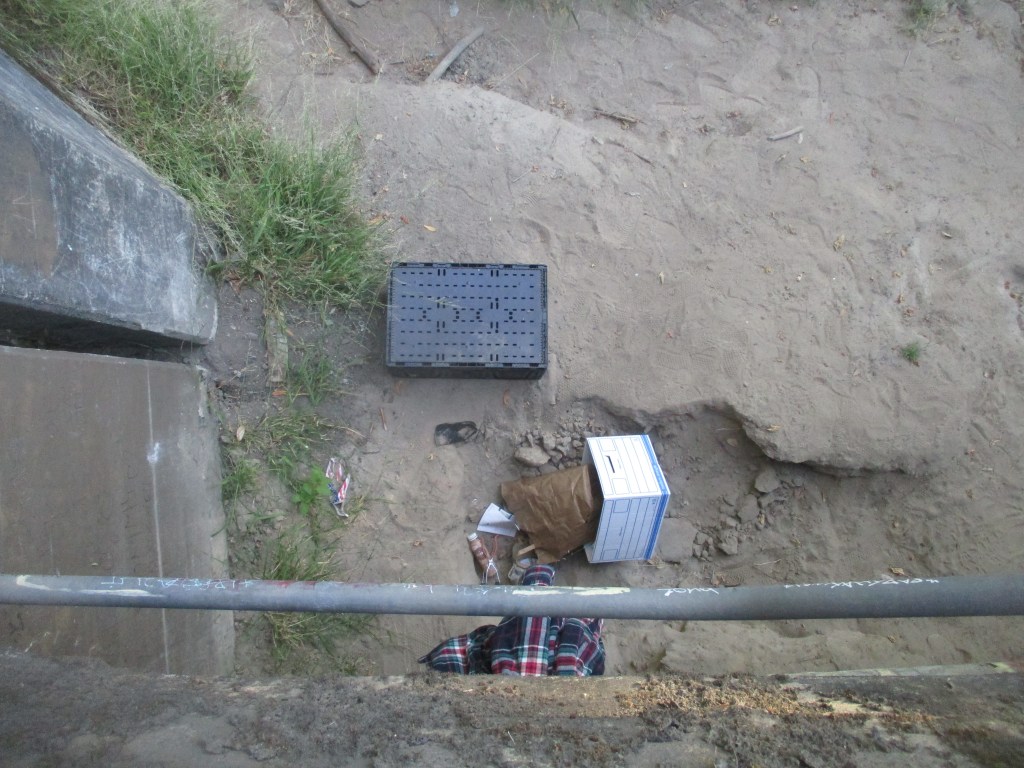
Seriously, that was her name. Karen. It was printed on her discarded baseball cap that was in the box of assorted trash that she tossed off the Graham Hill Road Bridge over Zayante Creek. There was some paperwork in the box too, which provided a bit more information. I was on the telephone and across the road at the gate of the industrial yard from where I work for part of the week when I saw her drop the box from the Bridge. I could neither yell to her while on the telephone, nor immediately end the call.

I did contact the sheriff though, as I walked across the road after ending the previous call. Prior to the discovery of identifying material, I doubted that anything could be done about the situation. Also, I did not want to trouble anyone with something that nothing could be done about. Nonetheless, I remembered that such crimes, even if minor, should be reported. The deputy who returned my call seemed pleased that I did.

Before I knew her name, I described Karen and what she was wearing. I also tried to describe a gentleman who was with her, but whom I had not seen much of. He walked ahead of her, as if embarrassed to be seen with her. I could not see a car that they drove there with; so they must have walked a considerable distance with the box of trash.

I also described how Karen and the gentleman she was with proceeded in the direction that they were going prior to dropping the box of trash, rather than back the way from which they came. I wondered if they had arrived from that direction previously, walked past, and then delivered the box as they returned. It was perplexing.

Of course, nothing could be done about this incident while it was necessary for deputies to prioritize more significant crimes. The box of trash was small enough to be collected and deposited into a dumpster within the industrial yard. Questions remain though.

Why did Karen drop her box of trash from the bridge?

Does Karen have a means with which to dispose of trash at home?

Did Karen leave the trash there so that homeless people would be blamed for it?

What is with Karen?!

Chateau du Mal Voisin

Derived from a misspelling and bad grammar, it is a fictitious place of the Peanuts comics. According to Charlie Brown, ‘Chateau du Mal Voisin’ translates from French into ‘Chateau of the Bad Neighbor’. Regardless of questionable syntax, it, in one form or another, is something that most of us can identify with.

The Chateau du Mal Voisin of the illustration here is fortunately not local. It is at the southeastern corner of the interchange of South Cochran Avenue and Venice Boulevard, just west of the Mid City district of Los Angeles. The picture was taken last December. The Chateau has been expanded extensively since then. Not only is it now larger than some of the two bedroom apartments on West Cologne Street in the background, but it has a spacious yard, a parking space for the occupant’s sedan, an ornate wrought iron security door, and, of all things, a mailbox. No building permits were issued. The resident pays neither a mortgage nor rent to live in this expensive neighborhood.

Those who do pay either a mortgage or rent to live here pay too much to contend with this in their neighborhood. Locally generated tax revenue is more than adequate to prevent this from happening, even if such prevention were to involve assuming the expense of providing more socially acceptable accommodations for the houseless. To be brutally blunt, this is unacceptable.

This certainly should not imply that the Community is not concerned for their houseless members. Like our local Community, the Mid City Los Angeles Community is remarkably generous and gracious in regard to helping their houseless neighbors improve their respective situations. In fact, that is what makes this Chateau du Mal Voisin so intolerable. It expresses a complete lack of appreciation for the graciousness of the Community.

Technically, people should not inhabit public spaces. The houseless do so only because they lack other options. Most attempt to be discrete and respectful of the Community, just as most of the Community is so respectfully accommodating and tolerant.

A Chateau du Mal Voisin such as this certainly confounds tolerance.

Liberalism Is A Mental Disorder

(Apologies for the delay of posting this recycled article from last year. It could not be reblogged, so got reposted, . . . . or whatever happened.)

Michael Savage wrote the book. It is supposed to be well worth reading. I have never done so. Nor do I intend to. I know I would not enjoy it. My prejudice is not based on what I believe the book to be about. It is derived more from the expectation of an objectionably straightforward presentation of accurate but unpleasant information that really should be common knowledge.

Yuck!

Conservatism is not perfect either. If extremist liberals could compose more than a few coherent sentences, one might write a book about it. Neither conservatism nor liberalism is the worst of the many social complications that those who identify with one but most definitely not the vilified other should be concerned about though. Extremism is what enhances the worst of both.

Homelessness and all the problems associated with it are social problems. They affect all of society. They are neither liberal nor conservative. Yet, extremists so readily blame politicians for causing such problems or allowing them to continue, as if they do so intentionally. Conservative extremist blame liberal politicians just like liberal extremists blame conservative politicians.

How many of those who blame others for homelessness actually do anything about it? Do any of them help the homeless procure domestic situations? Do any of them help the unemployed procure employment? Do they donate food or clothing to those who are in need of such resources? It seems that most are pleased to continue to complain about what others are not doing.

Fortunately, there are many within our Community who are very supportive in regard to helping the homeless, unemployed and needy. We do not hear much from them because they are not so unconstructively outspoken. They do not so blatantly blame others for problems that they are not willing to help out with.

November 1, 2020 -Memorial Tree Update

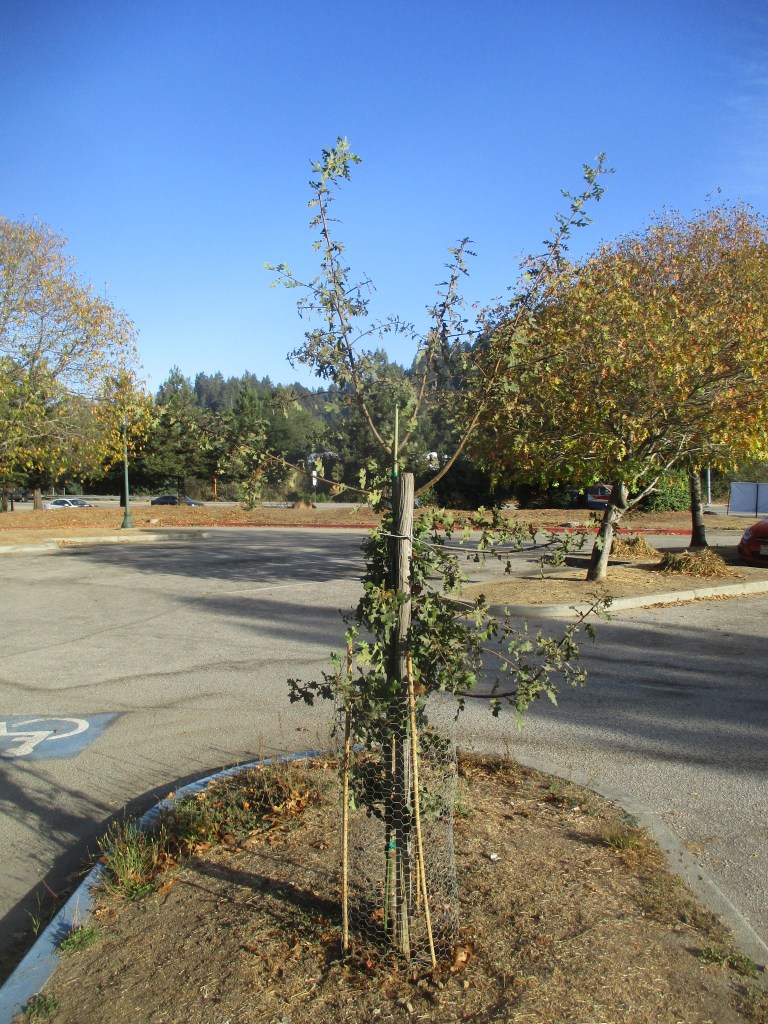
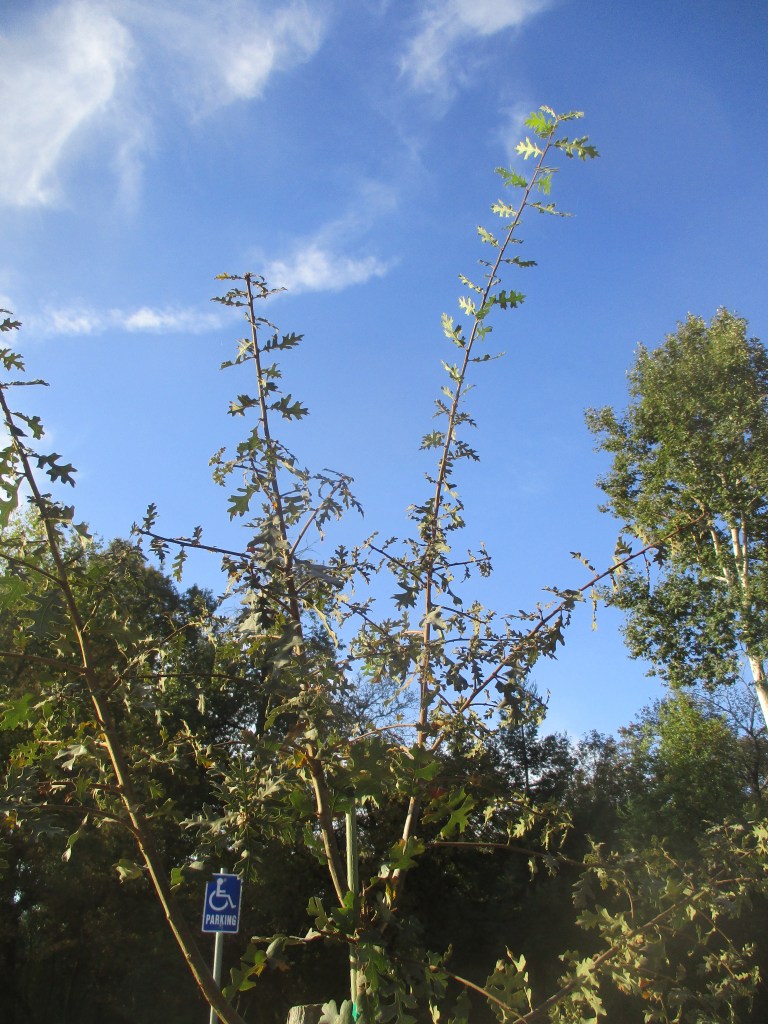
The Memorial Tree is remarkably healthy!

The Memorial Tree in Felton Covered Bridge Park was not expected to survive damage inflicted by a vandal last June. However, it recovered with unexpected efficiency and vigor, at a time of year when growth should have been decelerating prior to autumn. It is as if the vandalism never happened.

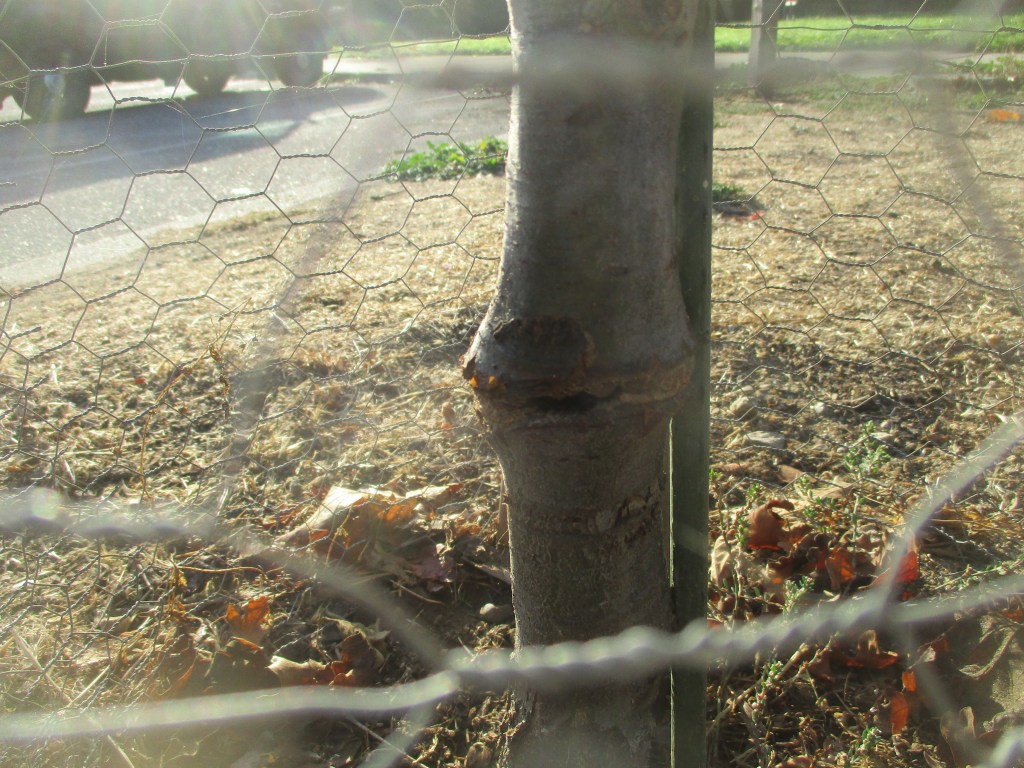
The worst of the damage is nearly healed.

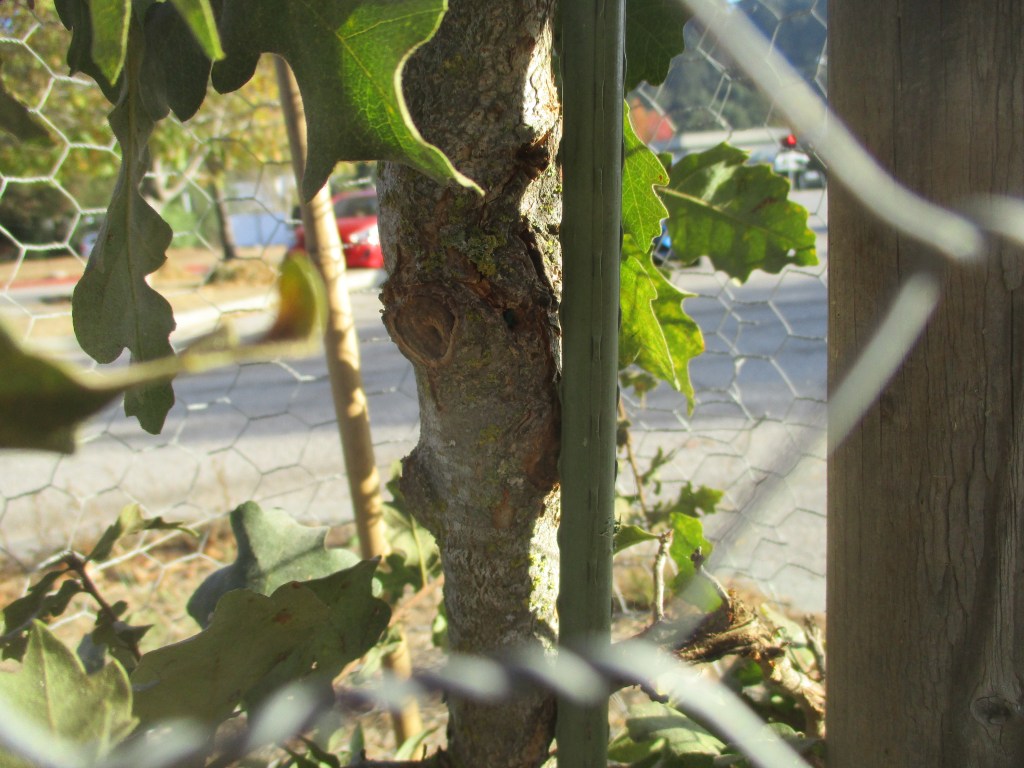
After unsuccessfully attempting to poison the Memorial Tree with salt, the vandal sliced more than half way through the trunk in three places. The worst of these three slices is nearly healed. Another has already healed over. The third is so efficiently healed that the scar is barely visible.

This damage is already healed over.

A gardener who maintains Felton Covered Bridge Park installed a cage of chicken wire around the lower portion of the trunk to hopefully dissuade the vandal from attacking the Memorial Tree again. The trunk is sturdier and would be more resilient to such vandalism than it was last June.

This damage healed over so efficiently that it is difficult to find. The scar is barely visible near the top of the picture.

Prior to the vandalism, the Memorial Tree had grown vigorously through spring, and was already decelerating its growth for summer, as is normal for the species within a natural habitat. By late summer, it would have been expected to concentrate resources into dormant terminal buds prior to defoliation through autumn and dormancy through winter.

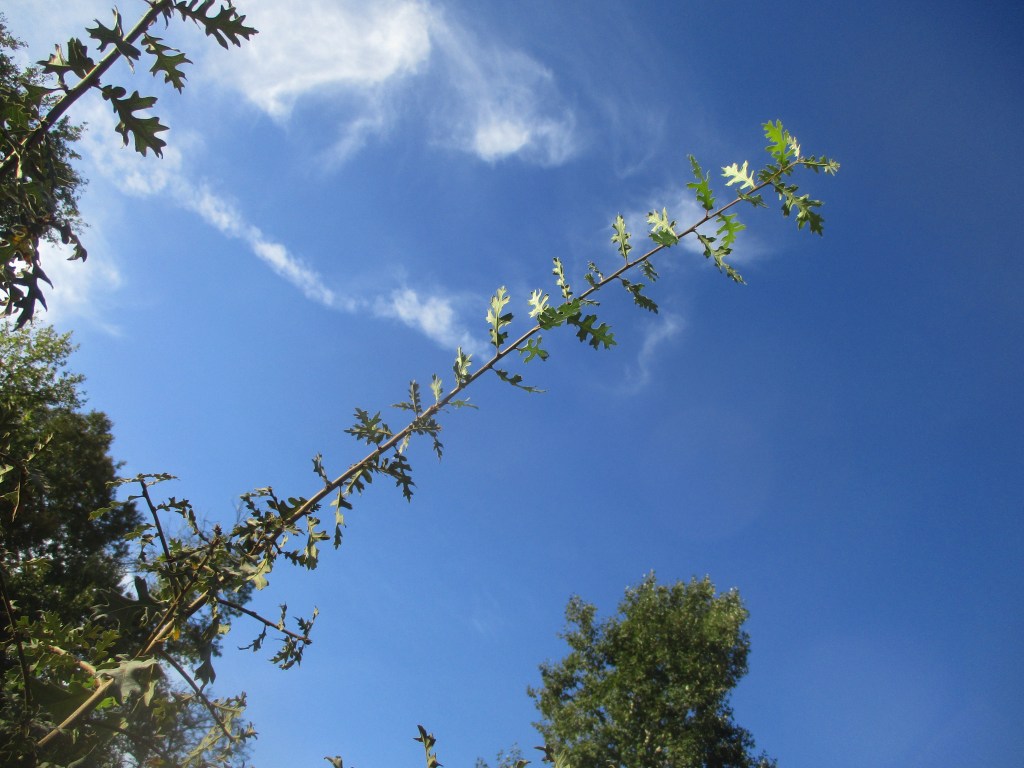
Instead, the Memorial Tree responded to the vascular distress associated with the vandalism by suddenly and unexpectedly accelerating vigorous vegetative growth until it was compelled to decelerate by cooling autumn weather. Instead of producing such growth below the damage, as is typical, the determined little Memorial Tree expanded its developing upper canopy.

More than half of this vigorous growth developed after the Memorial Tree was vandalized.

The Memorial Tree has recovered so efficiently that it will likely require only minor grooming while dormant through winter, to remove a few overly vigorous stems from the lower canopy. Minor stubble remains to promote trunk caliper development. The trunk may no longer need binding. The stabilizing lodgepole should remain for at least next year, even if it is unnecessary.

All this new growth will be groomed while dormant through winter.

Members of the Community offered to replace the Memorial Tree after it was vandalized and not expected to survive. Fortunately, replacement will not be necessary. This little Memorial Tree has survived other forms of damage, and is determined to continue to survive and flourish.

Out Of Service

July was when I was last able to write weekly for this blog. Since then, most posts were recycled older posts. I have mentioned a few times that I hope to resume writing new posts here, but so far, have been unable to do so. Other obligations require my attention for now. Realistically, I do not know when I will be able to resume writing weekly posts.

Facebook has likely been more interesting. I have not been there in quite a while. I am not sure I remember my password, or if I am a member of the group. I have been told that there are a few topics that are sometimes discussed there that I should write about here. I do not doubt that. So much has been happening!

I will post a brief article tonight, but it may be the last for a while.

World Wide Web

Again, because of other obligations, I must recycle this old article rather than write something new for this week. It might be a few weeks before I can resume writing.

We never know who will read what we post online. It is not like old fashioned newspapers that could only be read as far away as the printed pages got dispersed. Everyone with access to the internet has access to this.

Nowadays, there is nothing unusual about that. Just about everything is online. What is unusual is that so many outside of our distinguished Community are interested in reading about us.

This ‘blog’ (Gads! I hate that word!) is not even a month old, and contains only a few brief posts that are not particularly compelling. Yet, posts have been read by quite a few visitors, including some who are nowhere near here. There is certainly nothing wrong with that. In fact, it is rather gratifying. It is just unexpected.

Many of the issues that concern our minor local Community are common concerns that affect many other Communities all over the World. Nonetheless, different societies contend with such issues in their own unique ways. Are our techniques somehow relevant to other cultures and other societies? How similar are they? How are they different?

It will be interesting to see where outside of America our posts get read. So far, they have been read in the United Kingdom, Australia, New Zealand, India, France, Switzerland and China. If it were possible, it would also be interesting to see where within American the vast majority of those reading our posts are located.

Furthermore, all this interest in our distinguished Community stimulates interest in others who are concerned with some of the same issues that concern us, but from within the context of potentially very differnt cultures. Is homelessness really as tolerable in India as so many of us believe it to be? How do the homeless of Switzerland survive the dangerously harsh winters? That is what the World Wide Web is for.

Firewood

Some of us have done good business with firewood. Only a few have cut, split and sold it as a career. More have done so temporarily between occupations. There are always trees that need to be removed. There is also a seasonal need for firewood. The work is not easy, but it can be somewhat lucrative, which is helpful for those lacking better income.

The quantity of firewood consumed locally must be significantly less than what is consumed in harsher climates. Winters are neither very cold, nor very long here. That is why trees need not be cut down just for firewood. Plenty of firewood is retrieved from trees that fall or need to be removed. Nonetheless, there is plenty of work processing firewood for those who want it.

Firewood season never ends here. No one is in a rush to get their wood stacked before spring so that it is seasoned prior to the following autumn. Much of the firewood available is already seasoned. As long as there is enough seasoned firewood, a bit of green wood that is procured too late can be left for the winter afterward.

Not many here seem to be particularly discriminating about the type of firewood they burn. Oak and tan oak are typically preferred, but anything combustible seems to do, even fir.

Those who purchase firewood here are likely to purchase if from someone who happens to have a pickup full of it for sale, rather than make arrangements with a more reputable supplier. It makes business a bit easier for those who just cut firewood between other occupations. Of course, many woodcutters have regular clientele, just like more significant firewood businesses.

A healthy society does more than support local business, by also supporting those who lack full time businesses or employment.