Rate of Houselessness

There are more people who lack domestic situations in California than in any other state. Well, that should be obvious. There are more people in California than in any other state. 12% of all Americans live here. Even if the rate of houselessness were the same here as it is in other states, 12% of those who are houseless in American would live here. That is a significant number!

Since the rate of houselessness here is approximately double that of the rest of America, approximately 24% of those who are houseless in American should reside in California, although the actual ratio is approximately 22%.

This is not because houseless people migrate to California. More of the unhoused live in or near their hometowns than those who live within homes. Although the primary causes of houselessness are similar, albeit to various degrees, for most regions of America, the main difference is the cost of housing.

Homes and rents are ridiculously expensive here. It is extremely difficult for those who lose a home to procure another. If houselessness is the result of unemployment, it is very difficult for someone who lacks a domestic situation to procure new employment in order to procure a new domestic situation!

Recovery from houselessness is not nearly as difficult in other regions, even with significantly less income. Furthermore, since mortgages and rents are more affordable, it is not nearly as difficult to maintain a stable domestic situation in order to avoid becoming houseless. Many who live in poverty here can afford to directly purchase a home in other regions.

Not many houseless people migrate to California. More migrate from California to live in homes elsewhere. Unfortunately, they are replaced by more Californians who become houseless. Many prefer to stay in their respective home regions rather than migrate.

Fuentes Residence – Pacoima

This is just too delightful to not share. The video in the original article is even better.

By CHELSEA EDWARDS Published June 18 (2021)

A homeless encampment in Pacoima, California has turned into an art piece after a homeless man turned a hillside along a freeway into a home that comes complete with art and gardens.

The property was build and landscaped along the 118 Freeway by 65-year-old Jose Fuentes. He’s originally from Colima, Mexico.

Nathaniel Padilla is the owner of Taco El Canelo, a restaurant that is next to the encampment.

Padilla says, “He said he was a gardener. So he did landscaping, so he got really good with his hands.”

He says it is becoming something legendary.

Padilla says, “People love it. I have people climbing up the mountain to go give them gifts like he’s like he’s baby Jesus almost. I have many people come out and ask me questions about what’s going on. ‘What is this? Is this like a memorial?’ No, it’s not. It’s just a creative man at work.”

Padilla says Fuentes helps keep the shopping center clean and they have a great relationship.

“Honestly, he never does anything to offend anybody. So we don’t have any reason to call any police or anyone to remove him from here. He’s a really, genuinely nice guy, and we’re happy to have him here,” Padilla says.

City Councilwoman Monica Rodriguez addressed the encampment in a statement, accusing the state highway department of being negligent in maintaining the area and says that she, “continues to seek Caltrans cooperation and support to maintain their right of ways and work with appropriate agencies to coordinate services for the unhoused who are living on state property.”

Caltrans says it is working with various partners to moved the unhoused into safer situations and that due to COVID-19: “Caltrans is proceeding with the encampment cleanups if there was an immediate safety concern or threat to critical infrastructure.”

Fuentes says that no one has ever asked him to leave The hillside or has offered him housing but whatever happens, he’ll keep his creative flair.

He says, “They take it away. We move on. We build another place.”

New In Town

The significantly declining rate of houselessness here during the past several years has been gratifying to say the least. Somehow, while houselessness has been increasing so substantially in so many other Communities, most who previously lacked a stable home here have procured domestic situations. It is so gratifyingly contrary to the external trend. 

The situation is certainly not perfect though. A few remain houseless because of inability to function within domestic or professional situations, or to exploit very limited resources that should be available to those in such condition. Sadly, some are the most vulnerable of society. Others have potential to inadvertently cause problems for other within society.

Furthermore, although uncommon, a few transient houseless people continue to migrate through our Community. Some have reason to be here. Others are here only incidentally. Most seem to be respectful of society; but it is impossible to know for certain. Even those with good intentions are unfamiliar with the cultural expectations of the local Community. 

While a few more of the local Community were houseless, this minor houseless transient Community was afforded significantly more opportunity for ‘local’ Community interaction. Ironically, this distinctly local interaction is limited by the declining rate of houselessness. Fewer of the few who remain unhoused locally are qualified to represent our Community. 

Some of the transient houseless people relocate to another Community before becoming acquainted with our Community and the associated resources that are available to them here. Those who stay longer eventually become somewhat familiar with our Community, but perhaps less efficiently than they otherwise would, with more Community interaction. 

Community outreach by those who have not been houseless is effective but impractical. Obviously, they have homes, domestic lifestyles, and, most likely, employment to devote their time to. Also, they likely lack adequate familiarity with houseless culture.

Steven Michael Ralls Memorial Tree Update

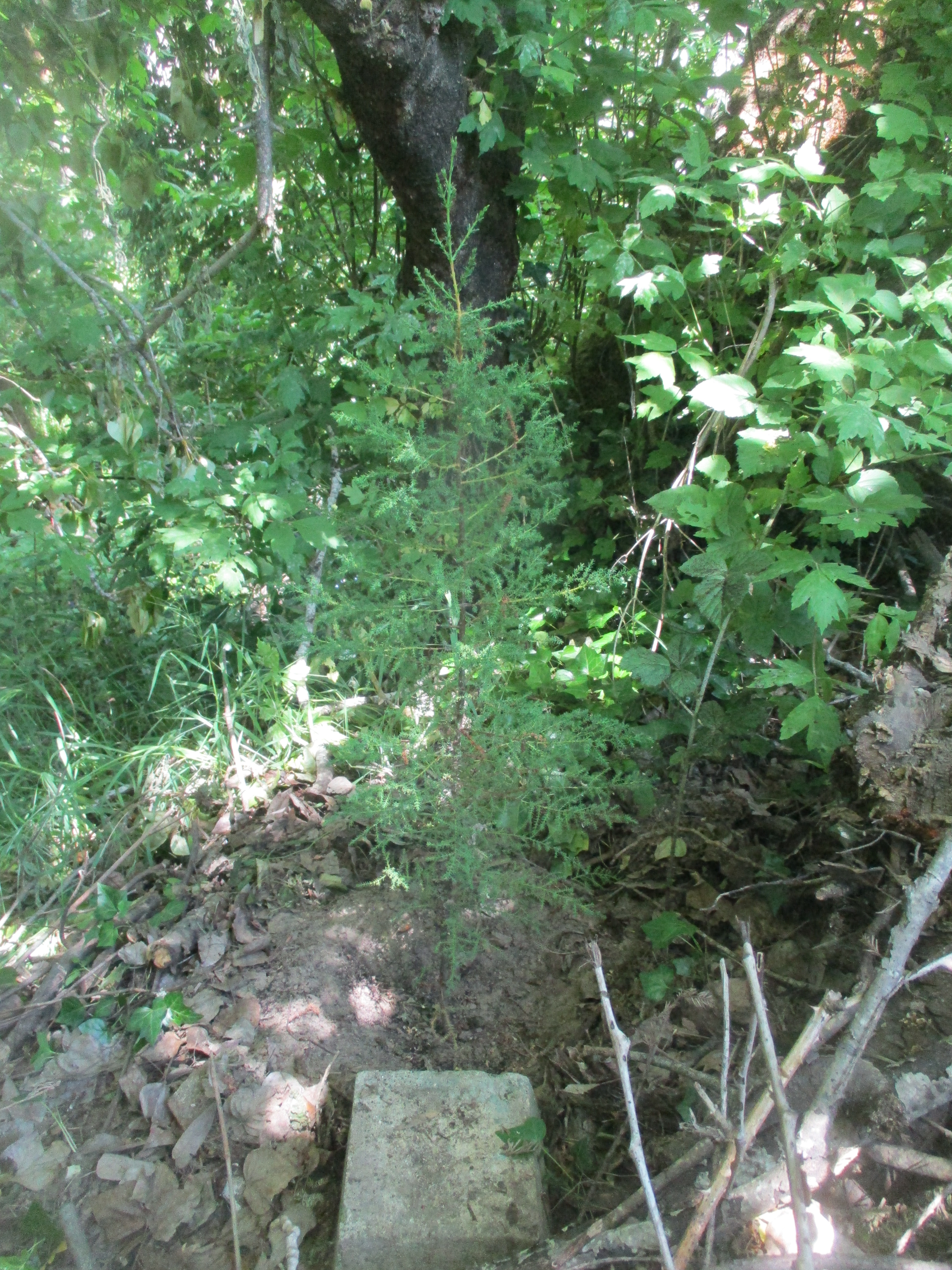
Steven Michael Ralls Memorial Tree – May 2, 2021

The Steven Michael Ralls Memorial Tree has done well since it was installed precisely a year ago, on the second of May of 2020, which was the third anniversary of the passing of Steven Michael Ralls.

Although it was installed after the primary rainy season, it enjoyed a few late rain showers prior to requiring supplemental irrigation through summer. It was occasionally given a bit of fertilizer to help it get established. Staking was not necessary.

The young tree may not seem to be much larger now than it was a year ago, but has undoubtedly dispersed roots sufficiently to survive without supplemental irrigation. It may receive a few more doses of fertilizer in conjunction with occasional supplemental irrigation, just to accelerate growth while it is still young and vulnerable, but should not get so much that it becomes reliant on such intervention.

Now that the tree is established and ready to grow more than it did last year, adjacent and freshly foliated box elders will be pruned or felled to allow more sunlight through. More box elders and other nearby small trees will be subordinated and felled to accommodate growth in the future.

The Steven Michael Ralls was the first of a row of trees that were installed to partially obscure the view of an industrial building from an adjacent roadway. Five Arizona cypress, two deodar cedars and a coast live oak were added last autumn to disperse roots through winter. Five other deodar cedars were installed nearby to partially obscure another view. All are also doing well now that the weather is warming. Since they were installed prior to the rainy season, they likewise should not require supplemental irrigation, even if they might get a bit.

Previous posts explain the importance of the Steven Michael Ralls Memorial Tree.

The Steven Michael Ralls Memorial Tree on May 2 of 2021 and 2020. (The images do not match well because I did not plan this comparison when taking the pictures.)

2021

HAPPY NEW YEAR!

It is good to be hopeful. It is also good to be realistic.

So many seem to be overly pleased that 2020 is over and done with, and expect 2021 to be so much better. It very well could be. However, there are no guarantees. Fire Season is over, but only until next fire season. After all, it is an annual event. The president that so many here despised will be replaced soon enough, but the nicer replacement is not exactly exemplary either.

The Pandemic, or whatever it is known as, was the major news last year that everyone wants to leave in the past. Unfortunately, the new year means nothing to the virus. Progress has been made, but did not eradicate the virus precisely at the stroke of midnight between 2020 and 2021. No one really knows how much worse the situation will get before it significantly improves.

Furthermore, the associated repercussions continue to evolve. While many are enjoying more outdoor activities and gardening, many more are unable to work to earn revenue to pay for the most basic of necessities. Some have procured other employment, but for less compensation. Those who have managed to continue with their employment may have found business lacking.

The eviction moratorium expires at the end of the month. No one really knows what will happen at that time. Some people who can not afford their rent or mortgage could become homeless. Those who rely on rental income may have been lacking some or all of such income for quite a while and may continue to do so. They may consequently be unable to pay their mortgages too.

The local homelessness rate, which had been decreasing for a while, only recently began increasing, and, sadly, has potential to get significantly worse.

Out Of Service

July was when I was last able to write weekly for this blog. Since then, most posts were recycled older posts. I have mentioned a few times that I hope to resume writing new posts here, but so far, have been unable to do so. Other obligations require my attention for now. Realistically, I do not know when I will be able to resume writing weekly posts.

Facebook has likely been more interesting. I have not been there in quite a while. I am not sure I remember my password, or if I am a member of the group. I have been told that there are a few topics that are sometimes discussed there that I should write about here. I do not doubt that. So much has been happening!

I will post a brief article tonight, but it may be the last for a while.

World Wide Web

Again, because of other obligations, I must recycle this old article rather than write something new for this week. It might be a few weeks before I can resume writing.

We never know who will read what we post online. It is not like old fashioned newspapers that could only be read as far away as the printed pages got dispersed. Everyone with access to the internet has access to this.

Nowadays, there is nothing unusual about that. Just about everything is online. What is unusual is that so many outside of our distinguished Community are interested in reading about us.

This ‘blog’ (Gads! I hate that word!) is not even a month old, and contains only a few brief posts that are not particularly compelling. Yet, posts have been read by quite a few visitors, including some who are nowhere near here. There is certainly nothing wrong with that. In fact, it is rather gratifying. It is just unexpected.

Many of the issues that concern our minor local Community are common concerns that affect many other Communities all over the World. Nonetheless, different societies contend with such issues in their own unique ways. Are our techniques somehow relevant to other cultures and other societies? How similar are they? How are they different?

It will be interesting to see where outside of America our posts get read. So far, they have been read in the United Kingdom, Australia, New Zealand, India, France, Switzerland and China. If it were possible, it would also be interesting to see where within American the vast majority of those reading our posts are located.

Furthermore, all this interest in our distinguished Community stimulates interest in others who are concerned with some of the same issues that concern us, but from within the context of potentially very differnt cultures. Is homelessness really as tolerable in India as so many of us believe it to be? How do the homeless of Switzerland survive the dangerously harsh winters? That is what the World Wide Web is for.

Where Are They Now?

Where have all the houseless people gone? There are noticeably fewer of them here now than there were only a few years ago. Some have gone nowhere, but are merely no longer houseless and prominently visible about town. Some have relocated in order to procure a domestic situation. For some, relocation is only temporary for employment. Many are doing remarkably well.

It has been several years since a lady who had lived in a camper here purchased a relatively luxurious home in Arizona, and then invited another friend to live there with her. It was a major change of lifestyle for both of them, but they adapted well, and now enjoy living there. The second friend to go would prefer to eventually return to Felton though. There’s no place like home.

A formerly houseless couple who had been living both here and Copperopolis procured a home in Copperopolis three or four years ago, and continues to visit friends here every few months. They have been to Colorado at least twice to visit another formerly local houseless gentleman who relocated there several years ago, in about 2012. He now lives with his daughter’s family.

In about 2013, another formerly local houseless couple purchased a comfortable home in Fremont. The camper they had previously inhabited stayed parked next to their garage for quite a while before they finally sent it to a recyclery. It was not easy. That old camper had been their home through some very difficult times, as well as some excellent times. ‘Home Sweet Home’.

Even without their names, their stories are gratifying. There are more like these, and there will continue to be more. If only there were more stories of houseless people finding homes than there are of people losing homes, until everyone lives in a home.

Big City Homelessness

Homelessness may not be more prevalent in all big cities than it is here, but it can be more visible where it is more concentrated. Nearly one percent of the populace of California is currently homeless. If that many are homeless in Felton, they are not obvious about it. Some reside with friends, or camp out discretely in their vehicles. Others make camp where obscured by forest.

Residing temporarily with friends may be no more difficult in big cities than it is here, but the other options are. There are fewer places to park discretely, and fewer forests to obscure even a minimal campsite. Furthermore, there are many more homeless people competing for the same very limited supply of discrete and obscured real estate in which to park or establish camp.

The ratio of homeless people relative to the rest of the populace may be no greater in big cities, but the total number of homeless people is overwhelming. One percent of the million people in San Jose is ten thousand, although not so many there are homeless. The population of Los Angeles is four times that of San Jose! Sadly, more than forty thousand people are homeless there.

Vast residential areas within these big cities lack resources that homeless people need to be close to, so in that regard, are inhospitable to homelessness. Consequently, the homeless populace tends to congregate where resources and campsites that are perceived to be discrete are more available. However, it is impossible for so many congregated homeless people to stay discrete.

We are very fortunate to reside within a Community that is so generously accommodating, and where those who want to assist homeless people are more able to do so. Homelessness here is not such a daunting problem like it is in bigger cities.

Vandalism

The little Memorial Tree was found to be askew late Wednesday afternoon.

This would have been an ideal time for a seasonal update on the little Memorial Tree in Felton Covered Bridge Park. Until recently, it had been healthier and growing more vigorously than it had since it was installed a few years ago. It had survived major accidental damage, and was just beginning to thrive. Sadly though, it was so severely vandalized that recovery is unlikely.

About a month ago, someone was seen briefly rummaging about the base of the tree, as if retrieving something that was dropped. Upon closer inspection, the observer noticed what seemed to be some sort of fertilizer, which was not considered to be a problem. A few days later, someone else recognized it as common salt, which is toxic to young plants, and promptly removed it.

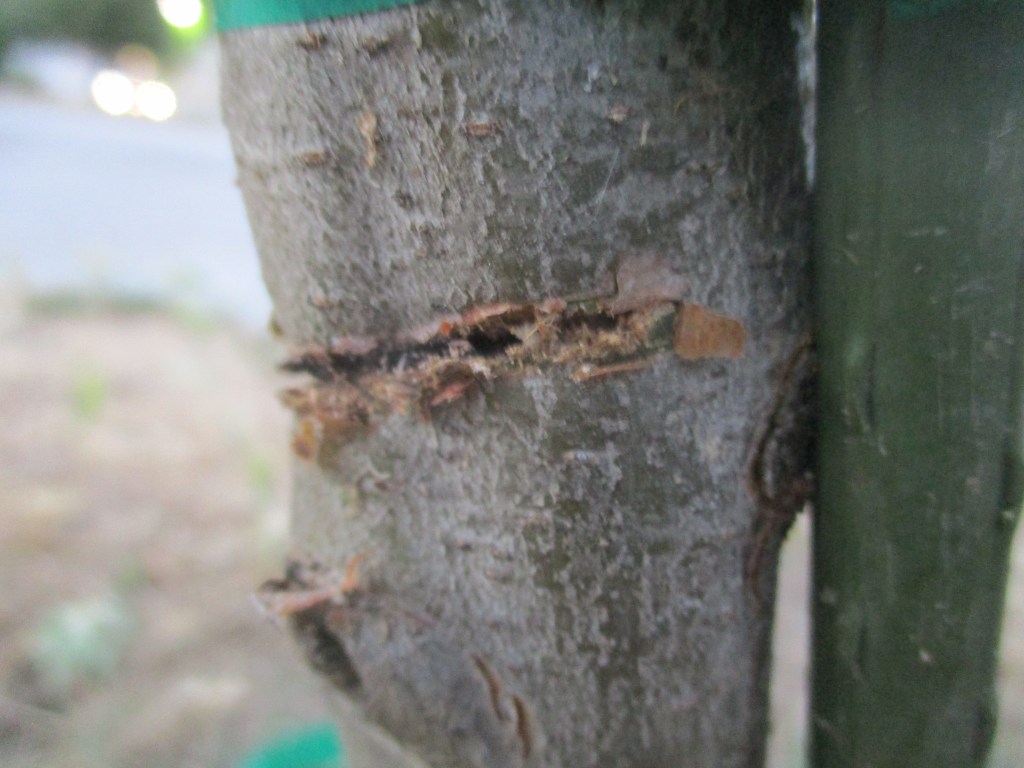
Last Wednesday, the Memorial Tree was observed to be askew and separated from its supportive stake, which seemed to be the sort of minor damage incurred by something as simple as a dog getting its leash tangled with it. However, as the tree was straightened and staked, three fresh saw cuts were observed in the trunk. Each cut severed the trunk about half way through.

A vandal is intent on depriving the Community of this Memorial Tree. That is what vandals do. They destroy assets, which are very commonly assets of Society. Of all the Memorial Trees in Felton Covered Bridge Park, this specific vandal specifically targeted the Memorial Tree that was contributed to Society by the Homeless of Felton, who innately have the least to contribute.

We will consult with the Santa Cruz County Parks Department this week about the future of this Memorial Tree or its potential replacement. However, the next Memorial Tree will likely be a Memorial Grove of several coast live oaks, perhaps with cedars to the east and west, in a less accessible but very visually prominent location near the western end of Mount Hermon Road.

Although the Memorial Tree initially seemed to be undamaged, three major cuts were found in the trunk.