Interesting Question

It is perplexing that the local houselessness situation improved so significantly a few years ago, and then stabilized, both prior to and concurrently with such significant increases in the rates of houselessness in so many other Communities. Of course, the rate of houselessness increased drastically as a result of the CZU Fire last August, but then stabilized remarkably efficiently as many of the victims, with the assistance of home owners’ insurance, procured at least temporary domestic situations. Many of those who remain houseless as a result of the CZU Fire are living elsewhere temporarily, so are not as visually apparent as the more familiar local houseless.

This unusual improvement of the local rates of houselessness was questioned at my other unrelated blog, in conjunction with commentary regarding the contrary nature of such information, relative to the experiences of other Communities.

This was my reply:

“That is an interesting question that no one seems to have an answer for. The trend did not coincide with trends elsewhere. But of course, the unhoused Community here involves only a few people, so the ‘trends’ that we observe are much more variable than they are in more significant Communities. (For example,) if two people (of the approximately twenty of the unhoused who reside here) happen to procure a domestic situation, regardless (of) actual trends everywhere else, that is 10% of the entire unhoused Community locally. Several years ago, several of the unhoused passed away within only a few years. (. . .) More recently, some relocated for employment, or for available domestic situations. The housed Community here is very generous with helping the unhoused improve their situations. Not only has the situation here improved, but the fake news about it has not been proliferated as rampantly as it had been. A few years ago, the unhoused were blamed by a few haters for ‘everything’ bad that happened here. Society simply does not subscribe to that anymore. We recognize the few haters for who they are. (. . .)”

Steven Michael Ralls Memorial Tree Update

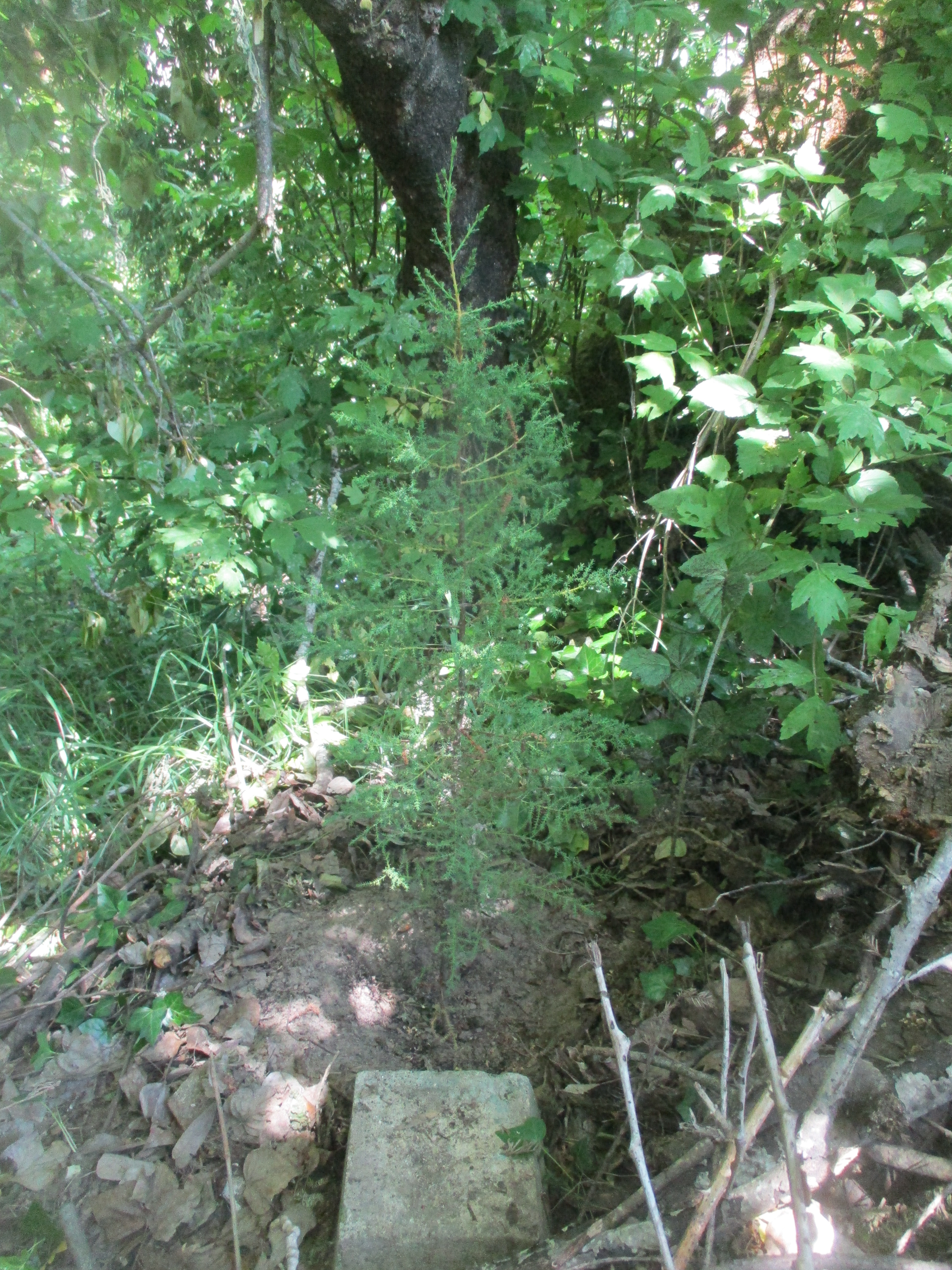
Steven Michael Ralls Memorial Tree – May 2, 2021

The Steven Michael Ralls Memorial Tree has done well since it was installed precisely a year ago, on the second of May of 2020, which was the third anniversary of the passing of Steven Michael Ralls.

Although it was installed after the primary rainy season, it enjoyed a few late rain showers prior to requiring supplemental irrigation through summer. It was occasionally given a bit of fertilizer to help it get established. Staking was not necessary.

The young tree may not seem to be much larger now than it was a year ago, but has undoubtedly dispersed roots sufficiently to survive without supplemental irrigation. It may receive a few more doses of fertilizer in conjunction with occasional supplemental irrigation, just to accelerate growth while it is still young and vulnerable, but should not get so much that it becomes reliant on such intervention.

Now that the tree is established and ready to grow more than it did last year, adjacent and freshly foliated box elders will be pruned or felled to allow more sunlight through. More box elders and other nearby small trees will be subordinated and felled to accommodate growth in the future.

The Steven Michael Ralls was the first of a row of trees that were installed to partially obscure the view of an industrial building from an adjacent roadway. Five Arizona cypress, two deodar cedars and a coast live oak were added last autumn to disperse roots through winter. Five other deodar cedars were installed nearby to partially obscure another view. All are also doing well now that the weather is warming. Since they were installed prior to the rainy season, they likewise should not require supplemental irrigation, even if they might get a bit.

Previous posts explain the importance of the Steven Michael Ralls Memorial Tree.

The Steven Michael Ralls Memorial Tree on May 2 of 2021 and 2020. (The images do not match well because I did not plan this comparison when taking the pictures.)

Liberalism Is A Mental Disorder

(Apologies for the delay of posting this recycled article from last year. It could not be reblogged, so got reposted, . . . . or whatever happened.)

Michael Savage wrote the book. It is supposed to be well worth reading. I have never done so. Nor do I intend to. I know I would not enjoy it. My prejudice is not based on what I believe the book to be about. It is derived more from the expectation of an objectionably straightforward presentation of accurate but unpleasant information that really should be common knowledge.

Yuck!

Conservatism is not perfect either. If extremist liberals could compose more than a few coherent sentences, one might write a book about it. Neither conservatism nor liberalism is the worst of the many social complications that those who identify with one but most definitely not the vilified other should be concerned about though. Extremism is what enhances the worst of both.

Homelessness and all the problems associated with it are social problems. They affect all of society. They are neither liberal nor conservative. Yet, extremists so readily blame politicians for causing such problems or allowing them to continue, as if they do so intentionally. Conservative extremist blame liberal politicians just like liberal extremists blame conservative politicians.

How many of those who blame others for homelessness actually do anything about it? Do any of them help the homeless procure domestic situations? Do any of them help the unemployed procure employment? Do they donate food or clothing to those who are in need of such resources? It seems that most are pleased to continue to complain about what others are not doing.

Fortunately, there are many within our Community who are very supportive in regard to helping the homeless, unemployed and needy. We do not hear much from them because they are not so unconstructively outspoken. They do not so blatantly blame others for problems that they are not willing to help out with.

Out Of Service

July was when I was last able to write weekly for this blog. Since then, most posts were recycled older posts. I have mentioned a few times that I hope to resume writing new posts here, but so far, have been unable to do so. Other obligations require my attention for now. Realistically, I do not know when I will be able to resume writing weekly posts.

Facebook has likely been more interesting. I have not been there in quite a while. I am not sure I remember my password, or if I am a member of the group. I have been told that there are a few topics that are sometimes discussed there that I should write about here. I do not doubt that. So much has been happening!

I will post a brief article tonight, but it may be the last for a while.

World Wide Web

Again, because of other obligations, I must recycle this old article rather than write something new for this week. It might be a few weeks before I can resume writing.

We never know who will read what we post online. It is not like old fashioned newspapers that could only be read as far away as the printed pages got dispersed. Everyone with access to the internet has access to this.

Nowadays, there is nothing unusual about that. Just about everything is online. What is unusual is that so many outside of our distinguished Community are interested in reading about us.

This ‘blog’ (Gads! I hate that word!) is not even a month old, and contains only a few brief posts that are not particularly compelling. Yet, posts have been read by quite a few visitors, including some who are nowhere near here. There is certainly nothing wrong with that. In fact, it is rather gratifying. It is just unexpected.

Many of the issues that concern our minor local Community are common concerns that affect many other Communities all over the World. Nonetheless, different societies contend with such issues in their own unique ways. Are our techniques somehow relevant to other cultures and other societies? How similar are they? How are they different?

It will be interesting to see where outside of America our posts get read. So far, they have been read in the United Kingdom, Australia, New Zealand, India, France, Switzerland and China. If it were possible, it would also be interesting to see where within American the vast majority of those reading our posts are located.

Furthermore, all this interest in our distinguished Community stimulates interest in others who are concerned with some of the same issues that concern us, but from within the context of potentially very differnt cultures. Is homelessness really as tolerable in India as so many of us believe it to be? How do the homeless of Switzerland survive the dangerously harsh winters? That is what the World Wide Web is for.

Minimal Turnout

The recycled article below is more than a year old, from a time when groups could gather. It may not seem to be relevant while there are no social events, but it will eventually become relevant again. It will be interesting to see how minimal the turnout for some of our familiar social gatherings will be. It was already very minimal prior to the current situation. So many who had formerly lacked a domestic situation or employment have become too busy with new domestic and professional obligations to attend.

(I am sorry that I am presently unable to write new articles as I had been. I do not know when I will resume. As I mentioned, the article below is recycled from more than a year ago.)

Big crowds are proportionate to the popularity of an event. They are sort of expected at exhibits of famous art, important baseball games, and Aaron Tippin concerts. There was quite a crowd at the Felton Remembers Parade and Covered Bridge Festival.

Smaller events draw much smaller but relatively significant groups. It is always nice to see children celebrating birthday parties in Felton Covered Bridge Park. Community Bridges (Mountain Community Resources or MCR) still does play dates for children there as well.

Our group is very unique. We get good turnout for our special events too, if we plan ahead for them, and extend invitations. Otherwise, for regularly scheduled events, such as lunch at Felton Presbyterian Church on Tuesday, and lunch at Saint John’s on Thursday, minimal attendance is an indication that more of us are doing well, and are unable to attend because we are at work, or busy with other responsibilities.

It is not as if we are an exclusive group that others want to be members of. Although just about anyone can join, most do so only out of necessity, but prefer to move onto better situations.

There were more of us in 2013 than there are now. Those who have joined our group since then have been less numerous than those who have found homes and employment. There are now fewer of us than there have been in a very long time. In that sense, minimal membership is a good thing.

It is unfortunate that this is not a common trend in most other places. Some of the same social difficulties that are less prevalent here than they had been are instead becoming more common elsewhere, particularly in more substantial towns and big cities, such as San Jose, Watsonville and Monterey. Are we doing something differently here?

Firewood

Some of us have done good business with firewood. Only a few have cut, split and sold it as a career. More have done so temporarily between occupations. There are always trees that need to be removed. There is also a seasonal need for firewood. The work is not easy, but it can be somewhat lucrative, which is helpful for those lacking better income.

The quantity of firewood consumed locally must be significantly less than what is consumed in harsher climates. Winters are neither very cold, nor very long here. That is why trees need not be cut down just for firewood. Plenty of firewood is retrieved from trees that fall or need to be removed. Nonetheless, there is plenty of work processing firewood for those who want it.

Firewood season never ends here. No one is in a rush to get their wood stacked before spring so that it is seasoned prior to the following autumn. Much of the firewood available is already seasoned. As long as there is enough seasoned firewood, a bit of green wood that is procured too late can be left for the winter afterward.

Not many here seem to be particularly discriminating about the type of firewood they burn. Oak and tan oak are typically preferred, but anything combustible seems to do, even fir.

Those who purchase firewood here are likely to purchase if from someone who happens to have a pickup full of it for sale, rather than make arrangements with a more reputable supplier. It makes business a bit easier for those who just cut firewood between other occupations. Of course, many woodcutters have regular clientele, just like more significant firewood businesses.

A healthy society does more than support local business, by also supporting those who lack full time businesses or employment.

Where Are They Now?

Where have all the houseless people gone? There are noticeably fewer of them here now than there were only a few years ago. Some have gone nowhere, but are merely no longer houseless and prominently visible about town. Some have relocated in order to procure a domestic situation. For some, relocation is only temporary for employment. Many are doing remarkably well.

It has been several years since a lady who had lived in a camper here purchased a relatively luxurious home in Arizona, and then invited another friend to live there with her. It was a major change of lifestyle for both of them, but they adapted well, and now enjoy living there. The second friend to go would prefer to eventually return to Felton though. There’s no place like home.

A formerly houseless couple who had been living both here and Copperopolis procured a home in Copperopolis three or four years ago, and continues to visit friends here every few months. They have been to Colorado at least twice to visit another formerly local houseless gentleman who relocated there several years ago, in about 2012. He now lives with his daughter’s family.

In about 2013, another formerly local houseless couple purchased a comfortable home in Fremont. The camper they had previously inhabited stayed parked next to their garage for quite a while before they finally sent it to a recyclery. It was not easy. That old camper had been their home through some very difficult times, as well as some excellent times. ‘Home Sweet Home’.

Even without their names, their stories are gratifying. There are more like these, and there will continue to be more. If only there were more stories of houseless people finding homes than there are of people losing homes, until everyone lives in a home.

Big City Homelessness

Homelessness may not be more prevalent in all big cities than it is here, but it can be more visible where it is more concentrated. Nearly one percent of the populace of California is currently homeless. If that many are homeless in Felton, they are not obvious about it. Some reside with friends, or camp out discretely in their vehicles. Others make camp where obscured by forest.

Residing temporarily with friends may be no more difficult in big cities than it is here, but the other options are. There are fewer places to park discretely, and fewer forests to obscure even a minimal campsite. Furthermore, there are many more homeless people competing for the same very limited supply of discrete and obscured real estate in which to park or establish camp.

The ratio of homeless people relative to the rest of the populace may be no greater in big cities, but the total number of homeless people is overwhelming. One percent of the million people in San Jose is ten thousand, although not so many there are homeless. The population of Los Angeles is four times that of San Jose! Sadly, more than forty thousand people are homeless there.

Vast residential areas within these big cities lack resources that homeless people need to be close to, so in that regard, are inhospitable to homelessness. Consequently, the homeless populace tends to congregate where resources and campsites that are perceived to be discrete are more available. However, it is impossible for so many congregated homeless people to stay discrete.

We are very fortunate to reside within a Community that is so generously accommodating, and where those who want to assist homeless people are more able to do so. Homelessness here is not such a daunting problem like it is in bigger cities.

Vandalism

The little Memorial Tree was found to be askew late Wednesday afternoon.

This would have been an ideal time for a seasonal update on the little Memorial Tree in Felton Covered Bridge Park. Until recently, it had been healthier and growing more vigorously than it had since it was installed a few years ago. It had survived major accidental damage, and was just beginning to thrive. Sadly though, it was so severely vandalized that recovery is unlikely.

About a month ago, someone was seen briefly rummaging about the base of the tree, as if retrieving something that was dropped. Upon closer inspection, the observer noticed what seemed to be some sort of fertilizer, which was not considered to be a problem. A few days later, someone else recognized it as common salt, which is toxic to young plants, and promptly removed it.

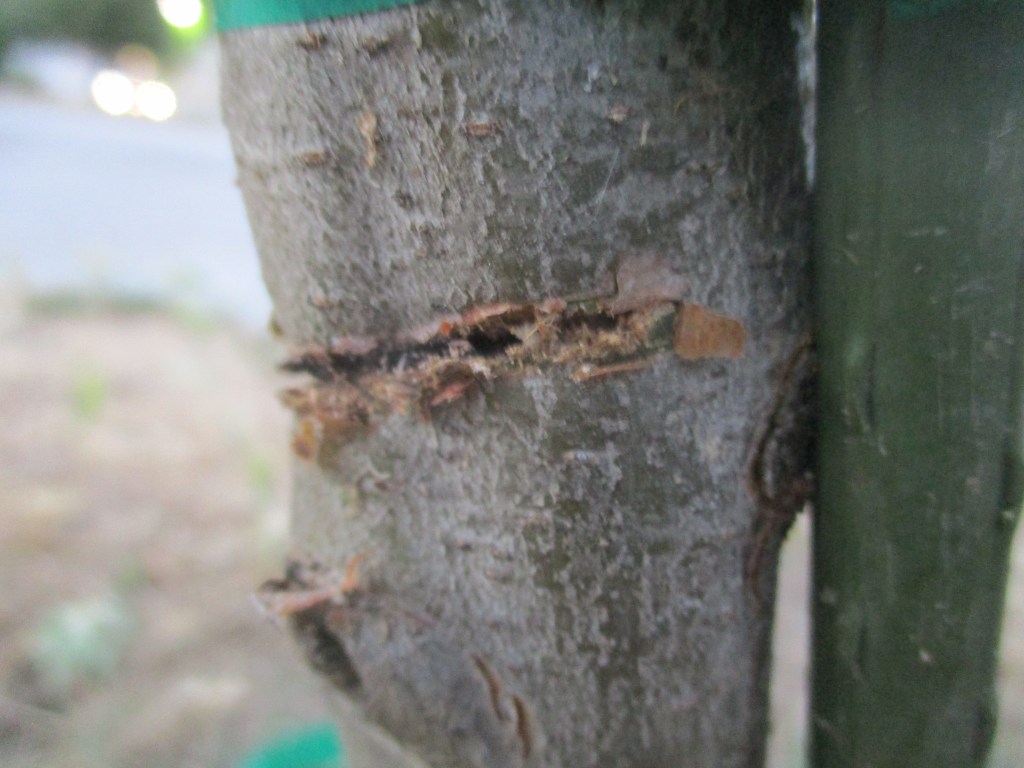
Last Wednesday, the Memorial Tree was observed to be askew and separated from its supportive stake, which seemed to be the sort of minor damage incurred by something as simple as a dog getting its leash tangled with it. However, as the tree was straightened and staked, three fresh saw cuts were observed in the trunk. Each cut severed the trunk about half way through.

A vandal is intent on depriving the Community of this Memorial Tree. That is what vandals do. They destroy assets, which are very commonly assets of Society. Of all the Memorial Trees in Felton Covered Bridge Park, this specific vandal specifically targeted the Memorial Tree that was contributed to Society by the Homeless of Felton, who innately have the least to contribute.

We will consult with the Santa Cruz County Parks Department this week about the future of this Memorial Tree or its potential replacement. However, the next Memorial Tree will likely be a Memorial Grove of several coast live oaks, perhaps with cedars to the east and west, in a less accessible but very visually prominent location near the western end of Mount Hermon Road.

Although the Memorial Tree initially seemed to be undamaged, three major cuts were found in the trunk.