Coastal Cleanup Day – Saturday, September 21, 2019

Coastal Cleanup Day is an ‘international day of volunteer action’; but we notice it most locally, as volunteers are out collecting trash and debris throughout the watershed of the San Lorenzo River. So much gets cleaned up and taken away in just three hours from 9:00 a.m. to noon!

Because there are fewer of us in our small Group than there had been before, there are fewer of us to attend. Two who so dutifully participated annually, as well as with most other cleanup events, now reside in Copperopolis, so will not participate locally. Another is temporarily in Morgan Hill, and works on Saturday.

This year, only one, or perhaps two from our Group will be participating, but will likely be going to Capitola to do so with friends. Of course, there are often those who do not plan to attend, but end up directing participants to areas of significant debris accumulation, and helping with the collection of such debris.

Statistically, for our small Group, that is still rather good attendance. If we estimate that there are about fifteen of us now, and one of fifteen participates in Coastal Cleanup Day, that is 7% of our total. 7% of the approximately 4,000 people of Felton would be 267 volunteers! There would not be enough trash and debris for that many to share.

In the past, when there were approximately twenty of us, at least two of us participated annually. There were more typically three or four of us. That is a minimum of %10.

Perhaps one of the few disadvantages to the many advantages of several of us procuring employment and housing, and some of us relocating to do so, is that there are not quite so many of us to participate in events such as the Coastal Cleanup Day.

An Uneventful Week

There is not much to write about today. The weather has been warm, but for those of us who live outside, pleasantly mild at night. None of us are in need of anything that can not be readily procured from our collective resources. The Community is as supportive as it always is. Some of us have been spending a bit more time at odd jobs. We should enjoy the calm while we can.

One from our group has been in Montana for work for at least two months. He must be doing well there, or he would have returned already, as expected. Perhaps one temporary assignment led to another. Someone else is in Santa Cruz for temporary work, but should return on Monday or so. It is unfortunate that some must leave the area for work, but it is better than nothing.

During this next week, another one from our group will likely be interviewing for regular (not temporary) part time employment, which could develop into full time employment. The work is within walking distance from town. The schedule is flexible. It is not the most lucrative sort of employment, but involves benefits that would be useful to someone who has been unemployed.

This is the time of year that the few of us who live outside should start to prepare for autumn. There is a 39% chance of rain early Monday morning, which is not much to be concerned with, but there will eventually be more. It will be increasingly difficult for those lacking adequate shelter to stay dry. We are fortunate that this is such a mild climate, without snow or hard frost.

Here in Felton and the San Lorenzo Valley, we are also very fortunate to be part of such an extremely compassionate, supportive and generous Community.

Honk If You’re Hateful

This is not another of several updates to the original ‘Honk If You’re Hateful’. This is an explanation of why that series of posts was deleted. The title is the same merely to put it into context.

The original post was about someone who regularly honked the horn of a vehicle when driving over a local bridge, presumably to annoy the homeless who were believed to live underneath. The honking was executed on such a precise schedule that it was recorded on sequential videos, which were shared within the context of the original post, as well as the subsequent updates.

A previous request for deletion of these videos, by the person who had been honking, had been denied.

However, something happened this morning that compelled compliance to that earlier request. A big pile of bedding, canned food, ramen, hashbrowns, bottled water, a jacket, a water bottle, a tarp, a flashlight and perhaps a few other items, was left at a gate near the bridge where the honking had been occurring. This message was with the pile of goods:

Aug 12

This is a peace offering. Please give these items to anyone you think needs them. I am not hateful, just upset and frustrated about some things that relate directly to this bridge. I won’t explain further because I just want to resolve this in a peaceful manner. I saw that you took down that misc. info today so this is my peaceful reaction to that. I would like to say that I have been randomly helping people in Felton who needed it for years with sandwiches, coffee ect. My most recent act was Easter morning at 6:45 am to an older gentleman who had no jacket. I gave him the 120.oo jacket off my back (in front of the coffee shop). We may or may not agree about a lot of things but I gave it some thought. What you are doing is sticking up for the little guy and that is something that I admire actually. [peace sign]

We all know what it is like to be ‘upset and frustrated’. We also know that we all sometimes express such frustration inappropriately. I posted the videos and associated unpleasantries online because I was frustrated by what was happening, but lacked a means for constructive expression of that frustration. That is no excuse, but merely an explanation.

Although vague in this regard, the letter seems to indicate that there is a possibility that the honking was not necessarily intended to annoy any of us directly, but was merely an expression of frustration ‘about some things that relate directly to this bridge’. I believe that we all know how justifiable that is!

There is nothing vague about the jacket given to one of our veteran friends on Easter morning. If I remember correctly, it included coffee and doughnuts.

In the picture below, of the goods delivered this morning, there are four big cans of beef stew to the upper right. These cans may seem to be too big for those of us who lack refrigeration. However, with a bit more added, they will work nicely for luncheon at Felton Presbyterian Church at noon on Tuesdays. There is always plenty to go around, and everyone is welcome.

Memorial Tree Update

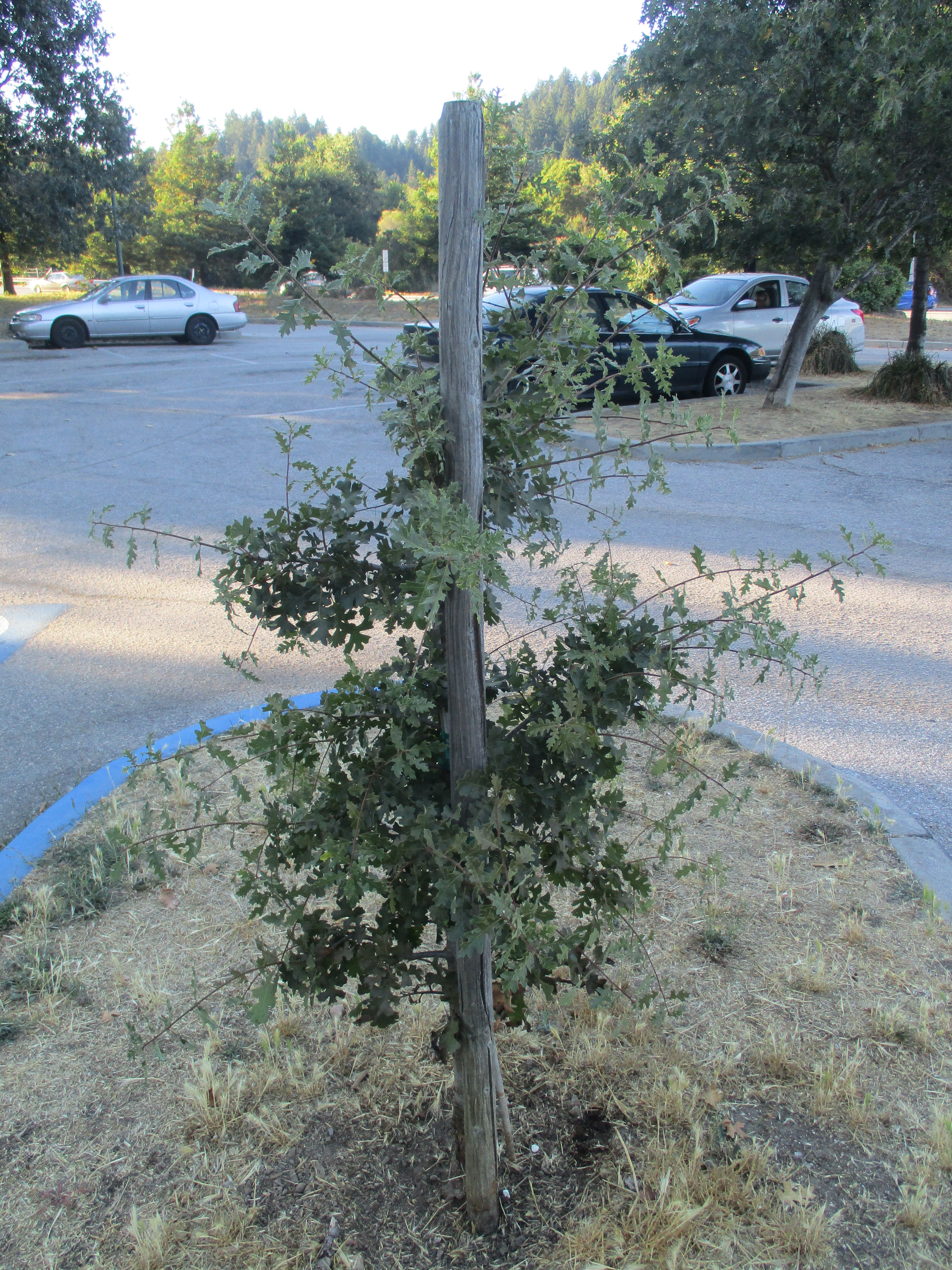
This is the best season so far! Because this is the first update on this blog, there is nothing here to compare the progress of this small Memorial Tree to; but links to older updates on another blog can be found at the older (reblogged) article, ‘May 2‘. Some of those updates link to even more updates. This little Memorial Tree has had quite a history in Felton Covered Bridge Park.

It is actually the fourth tree in this particular spot. The original black oak was run over by a car many years ago, leaving the site vacant for a long time. An Eastern red cedar was planted on New Year’s Day in 2013, but later the following summer, succumbed to what dogs do to small trees. A bigleaf maple was planted the following winter, but also succumbed in its second year.

In the last few years since then, this little valley oak has contended with major difficulties too. Until recently, it had been gouged regularly by weed eaters when the weeds around it were cut down, even though we regularly pull the weeds around it so that the weed eater does not need to get so close. Before it could recover from getting gouged, it got gouged again, several times!

This is why it is still so puny. Every year, it puts out only a few inches of new growth. In fact, that is how it started out this year, with only a few inches of new spring growth that blinded out too early in the season. Then, for no apparent reason, it put out a second phase of summer growth, with an abundance of vigorous shoots that are about a foot long! This is very encouraging.

Although still puny, the little Memorial Tree is exhibiting the sort of resilience and vigor that it needs to survive in this less than optimal situation. As the bark of the lower trunk matures, it will be less susceptible to damage caused by weed eaters. As the tree grows up and above pedestrian traffic, the limbs will be less susceptible to breakage. The next few years will be critical.

No more growth is expected this late in summer, although the small new leaves will likely continue to expand for a while. Terminal buds are likely in the process of blinding out for the year. When the tree is dormant and defoliated in autumn, lower limbs will get pruned away, and the main trunk will get bound and staked. There will be no rush, as long as it is done before spring.

The picture above shows how long the new growth is. The picture below shows how this new growth looks on the small tree. The picture at the bottom shows how much smaller the tree was not too long ago. It also shows that weeds are pulled around the tree.

Happy Birthday!

Happy 54th! It was a great Sunday afternoon yesterday, for a birthday party in the shade of the big cottonwoods of Felton Covered Bridge Park. A 54th birthday may not seem like justification for a birthday party, but we so like to entertain. The birthday girl came from Quail Hollow. The hostess brought the cake and table full of sweets from Capitola. Other guests came from Boulder Creek. It was not a big crowd, but it was enough for us.

It is amazing how much of life happens outside. Even those of us who live in homes that could accommodate our small group would prefer to come here for such events as birthdays, and the occasional picnic luncheons and diners. It is where we celebrate the lives of those who are no longer with us, and those who have merely moved away but sometimes come to visit. It is where we meet new friends and catch up with those we met long ago.

Some of us still miss the vacant field with piles of road debris that was here before. We are too old to be hotdogging around on bicycles and motorbikes anyway. The grand sycamore is still here, for now, on the western edge of the parking lot. So is the other big sycamore closer to Felton Covered Bridge, as well as the big cottonwoods that shade so many of our celebrations. Memorial redwoods are newer, but will eventually be old too.

Yesterday afternoon was about neither the past nor the future. It was a brief celebration, just because that is what we sometimes do.

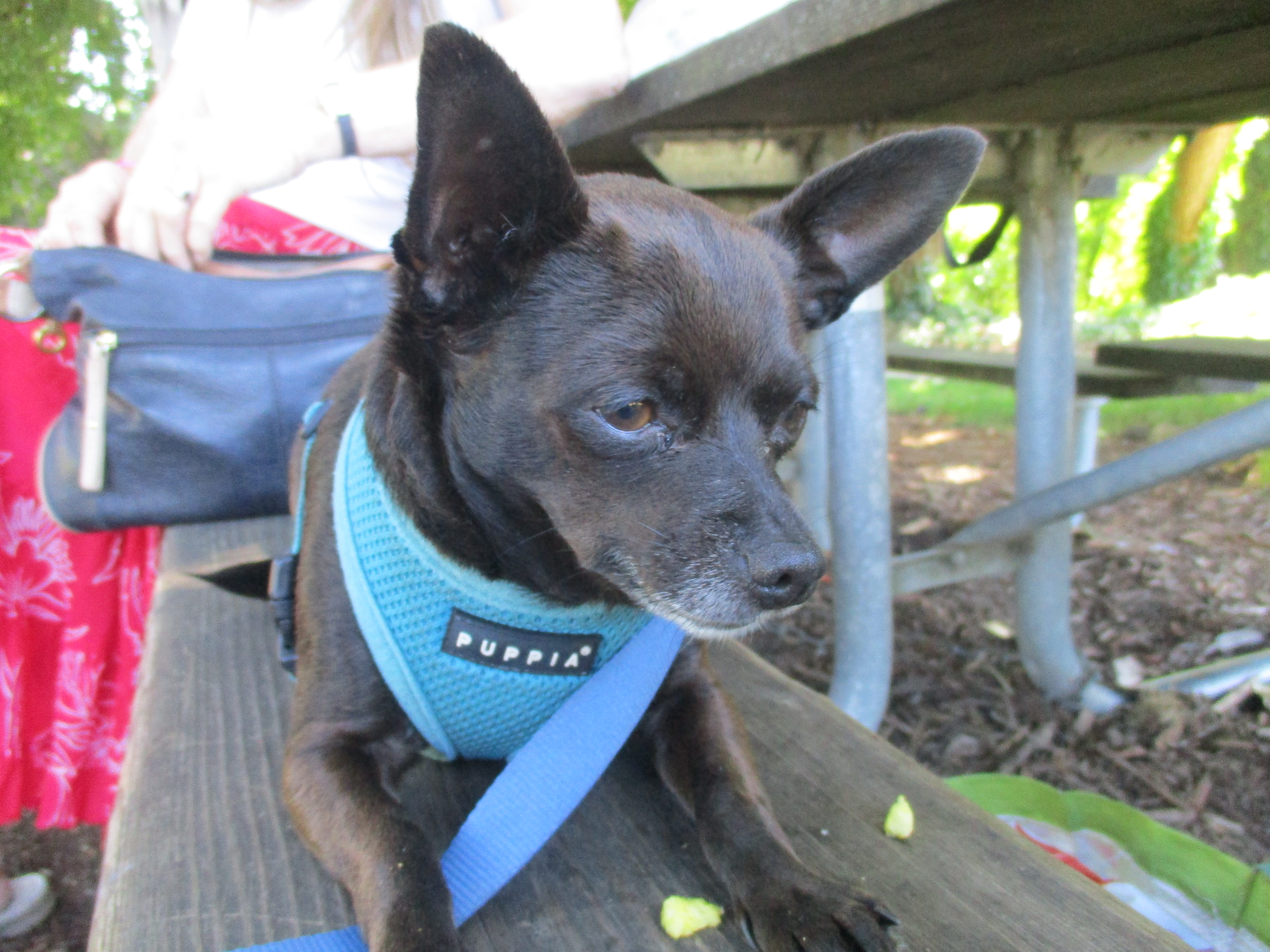
Peewee, who lives with the guest of honor, believed that she was the guest of honor. Of course, no one argued with that.

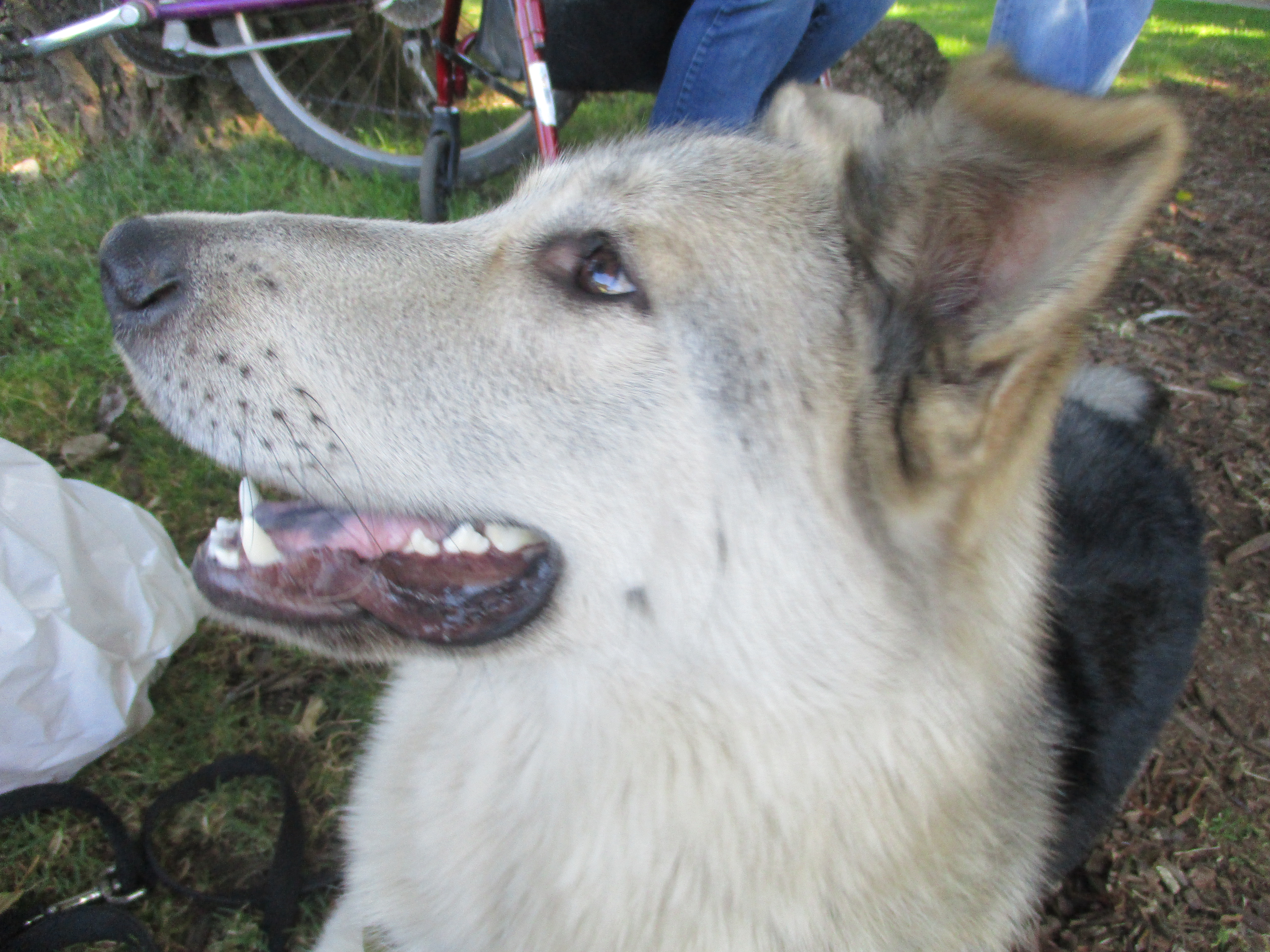
Buttercup, of Boulder Creek, was pleased with here beefy treats, and was not at all interested in cake.

Moose, who lives with Buttercup, does not seem to understand that he is not a chihuahua.

Workday

Workday at Felton Presbyterian Church, from eight to noon on Saturday, July 27.

Yes, that was yesterday. I would have written about it earlier, and in time to plan for it; but I was just informed about it less than a day earlier, on Friday morning. Fortunately, plenty of parishioners attended and got quite a bit done. In the future, we will need to be more diligent about announcing the workdays at lunch on Tuesdays. Even though some of us who attended more regularly in the past are no longer here, there are newcomers.

The biggest project was the removal of those rotting benches on the northern half of the patio out front. The sturdy posts that supported them for all these years were surprisingly sound, and the last few needed to be pulled out by a pickup with a tow chain. It was a mess, but worth the effort. The benches on the western half of the patio are still intact, so will remain for now.

The flowering crabapple tree did not get the major pruning that it so desperately needs, because it happens to be right over where the benches were being removed. That project might get done separately from a workday, just because it would be in the way of other projects. ‘Workday‘ explains why it is so important. The smaller flowering crabapple tree will get only minor pruning while dormant next winter.

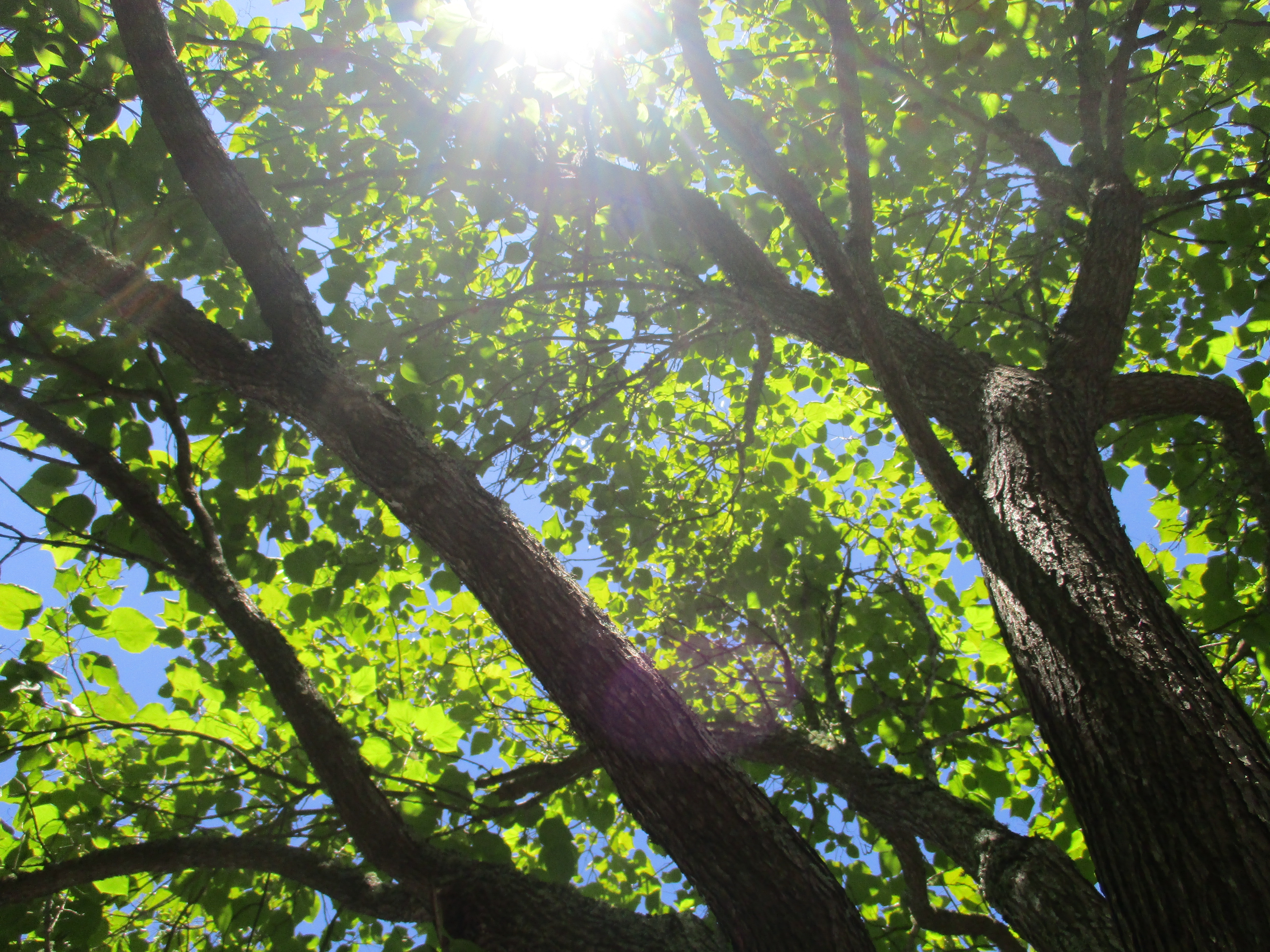
Only two low and minor limbs needed to be pruned away from the big catalpa tree that was supposedly getting too low over the parking lot. That tree, in the picture above, has really grown up nicely. It seems like only a few years ago when we were still considering removing it before it got too big and cumbersome. Another unhealthy and disfigured catalpa tree, that grew up with it just about twenty feet away, was pulled out back then.

Some of the low limbs of the cypress between the parking lot and the A&W got pruned out or groomed. That area has always been a mess, and needs more attention. The ivy on the lanai of Taylor hall also needs more attention, particularly since it was shorn to expose more of the internal problems yesterday. The hedges at the south end of the patio were shorn quite proficiently, and need nothing more for now.

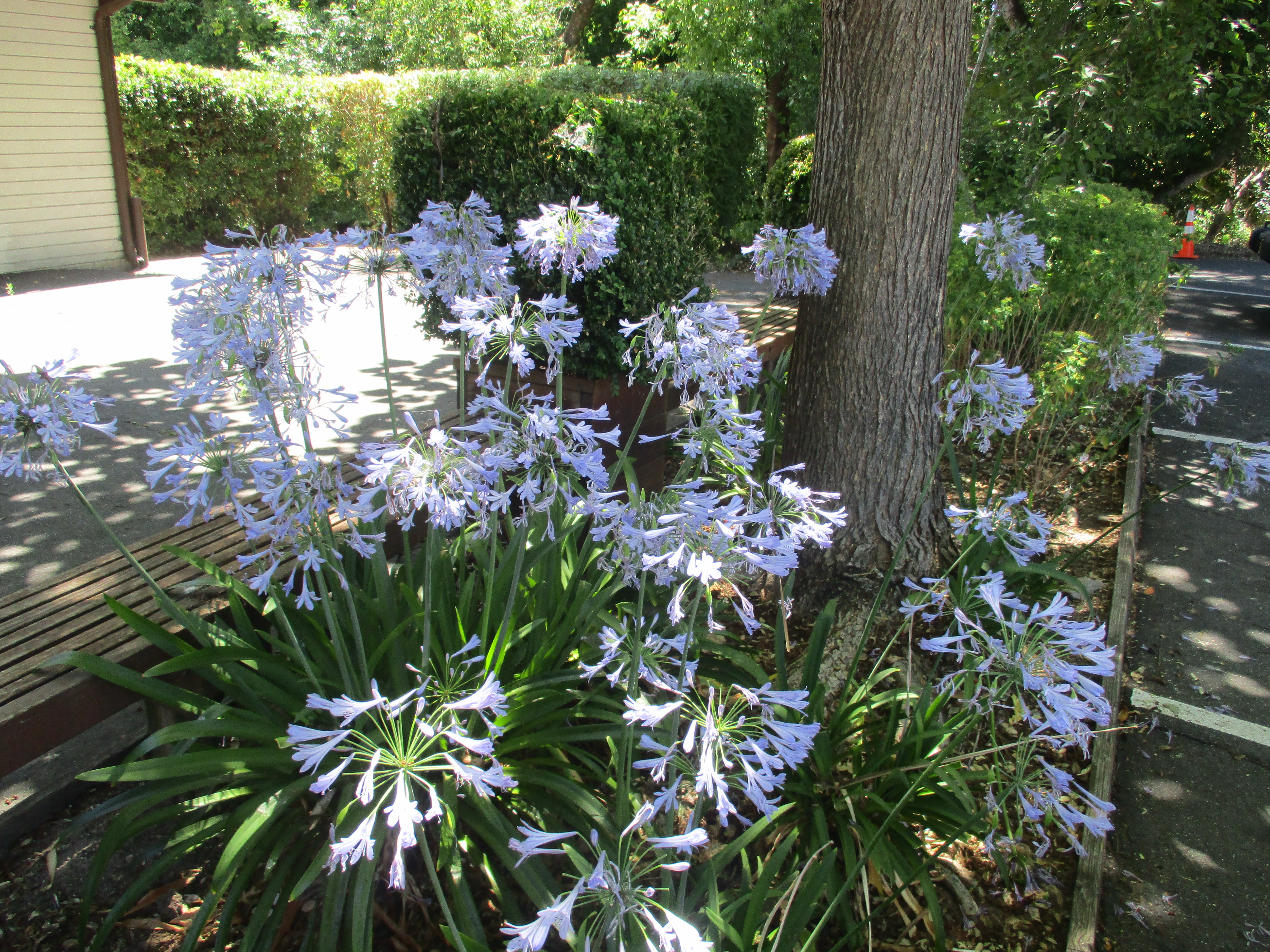
The lily-of-the-Nile between the patio and parking lot needed nothing yesterday. I just took the picture below because they were still blooming like the Fourth of July. They were one of the more significant projects many years ago. When they needed to be removed from a home in Aptos, we dug, split, groomed and plugged them here, where they happily bloom now.

Trendsetters

Fashion trendsetters we are not. Some of us wear clothing that was donated by others partly because it was no longer in style. We take what we can get.

Nor do we start trends of electronics technology. Most of us are satisfied with the basics, or none at all.

Most of us are not at all interested in keeping up with the trends that others indulge in.

Yet, somehow, we inadvertently started a culinary trend that we probably should have kept as our secret.

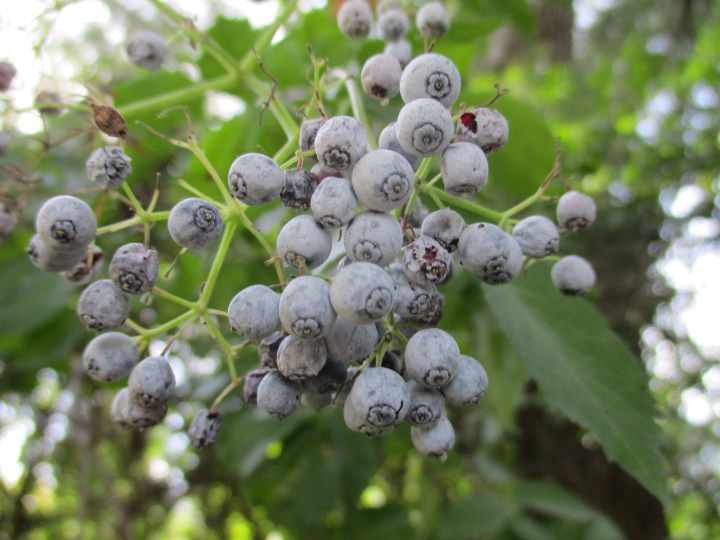
Black elderberry had already become a culinary and medicinal fad. It started with medicinal black elderberry products, such as herbal extracts and tinctures, to stimulate the immune system. From there, black elderberry tea, syrup, candy and (cooked) juice were popularized as more culinarily appealing options for exploiting the health benefits of this rediscovered fruit. Even old fashioned products made from the flowers became trendy.

All the while, the black elderberries that these products were made from came almost exclusively from eastern North America and Europe, within or somewhere close to regions that they are naturally native to. Black elderberry plants that are grown for fruit production are quarantined from import into California.

No one seemed to notice the native blue elderberries that grow wild here. Well, no one noticed until our blue elderberry jelly started wining ribbons annually at the Jelly & Jam Competition of the Santa Cruz Mountains Harvest Festival several years ago. Winning ribbons was no big deal when there were only a few entries, but it did bring attention to the formerly ignored native blue elderberries.

Suddenly, blue elderberries are getting harvested so thoroughly that it is not so easy to get enough to make jelly for the Jelly & Jam Competition this autumn. Besides jelly, people are making syrup, wine and even a distilled brandy like concoction from them. We can only hope that fermentation of the wine denatures the toxins of the raw juice like cooking does. (Raw elderberries are toxic.)

Those who had invited some of us to collect berries from their properties in the past are finding that the berries are getting collected by neighbors before we can get to them. After seeing the berries ignored for as long as anyone can remember, the neighbors are not likely aware that blue elderberries are now in demand. Fortunately, we have multiple sources, and we do not need many.

Trona

Trona is the sort of place than not many of us have ever heard of, even though it is only about 275 miles away in the Mojave Desert, right here in California. It does not look like much from satellite. It must look like so much more to the nearly 2,000 people who live there. It is their home, just like Felton is ours.

Trona is suddenly in the news, after the moderate but significant earthquake that occurred there on the Fourth of July, and the even more significant earthquake that occurred there yesterday morning. The second of these two earthquakes was stronger than the Loma Prieta Earthquake that destroyed so many home here in 1989. Aftershocks will continue for a long time, and there is a potential for even more significant earthquakes.

There is not as much damage in the Trona region as there was here after the Loma Prieta Earthquake, but only because there is less to damage. We all know that limited collective damage does not make our own individual losses any easier. Some will be without their homes, at least for a while. Many will be without electricity for a while. A lack of air conditioning can be dangerous in the severe heat of the Mojave Desert in summertime.

People will help each other out. They always do. It may not be easy. It may be downright difficult for many. Nonetheless, the best of humanity comes out at the worst of times.

After the Loma Prieta Earthquake, many people throughout the region were homeless, even if only temporarily until their homes were made safe. Many camped out in their yards, parks or parking lots. What was not discussed much afterward was how some who found it necessary to do so were helped through their difficulties by those more experienced with camping out; namely, the local homeless people.

World Wide Web

We never know who will read what we post online. It is not like old fashioned newspapers that could only be read as far away as the printed pages got dispersed. Everyone with access to the internet has access to this.

Nowadays, there is nothing unusual about that. Just about everything is online. What is unusual is that so many outside of our distinguished Community are interested in reading about us.

This ‘blog’ (Gads! I hate that word!) is not even a month old, and contains only a few brief posts that are not particularly compelling. Yet, posts have been read by quite a few visitors, including some who are nowhere near here. There is certainly nothing wrong with that. In fact, it is rather gratifying. It is just unexpected.

Many of the issues that concern our minor local Community are common concerns that affect many other Communities all over the World. Nonetheless, different societies contend with such issues in their own unique ways. Are our techniques somehow relevant to other cultures and other societies? How similar are they? How are they different?

It will be interesting to see where outside of America our posts get read. So far, they have been read in the United Kingdom, Australia, New Zealand, India, France, Switzerland and China. If it were possible, it would also be interesting to see where within American the vast majority of those reading our posts are located.

Furthermore, all this interest in our distinguished Community stimulates interest in others who are concerned with some of the same issues that concern us, but from within the context of potentially very differnt cultures. Is homelessness really as tolerable in India as so many of us believe it to be? How do the homeless of Switzerland survive the dangerously harsh winters? That is what the World Wide Web is for.

Minimal Turnout

Big crowds are proportionate to the popularity of an event. They are sort of expected at exhibits of famous art, important baseball games, and Aaron Tippin concerts. There was quite a crowd at the Felton Remembers Parade and Covered Bridge Festival.

Smaller events draw much smaller but relatively significant groups. It is always nice to see children celebrating birthday parties in Felton Covered Bridge Park. Community Bridges (Mountain Community Resources or MCR) still does play dates for children there as well.

Our group is very unique. We get good turnout for our special events too, if we plan ahead for them, and extend invitations. Otherwise, for regularly scheduled events, such as lunch at Felton Presbyterian Church on Tuesday, and lunch at Saint John’s on Thursday, minimal attendance is an indication that more of us are doing well, and are unable to attend because we are at work, or busy with other responsibilities.

It is not as if we are an exclusive group that others want to be members of. Although just about anyone can join, most do so only out of necessity, but prefer to move onto better situations.

There were more of us in 2013 than there are now. Those who have joined our group since then have been less numerous than those who have found homes and employment. There are now fewer of us than there have been in a very long time. In that sense, minimal membership is a good thing.

It is unfortunate that this is not a common trend in most other places. Some of the same social difficulties that are less prevalent here than they had been are instead becoming more common elsewhere, particularly in more substantial towns and big cities, such as San Jose, Watsonville and Monterey. Are we doing something differently here?