Unemployment

Information regarding the main causes of homelessness is always confusing. There are too many dynamic variables to limit the precision of data, even within a specific region and time range. Nonetheless, unemployment is consistently one of the most common causes of initial homelessness. Most studies rank it at the main cause. Others rank it as the second most common cause.

While so many were unable to work during the ‘Stay At Home’ order, the Eviction Moratorium was enacted to temporarily prevent evictions of the unemployed who were unable to pay their rent or mortgages. Otherwise, more of us could have become homeless by now. Unfortunately, it is not a perfect solution, and temporarily deprives landlords of their needed rental revenue.

Now that so many are able to return to work and earn revenue again, the past due accounts of rents and mortgages will continue to be a major expense for those who do not earn much more than a modest cost of living. Some could still become homeless. Some might need to relocate. Because some businesses will not recover, some of us will likely need to seek other employment.

Unpleasant predictions of increasing homelessness during the next few months might not be totally inaccurate, but mostly seem to be exaggerated. Most landlords and mortgage holders are likely to be more willing to negotiate reimbursements of delinquencies in order to avoid foreclosures and vacancies. It might be difficult to replace tenants while so many can not afford rents.

It seems that most within our Community who are still unable to work have already procured alternative employment. For some, such alternative employment is only temporary until they can resume their normal employment. Although no one should have become homeless because of unemployment during the eviction moratorium, a few are planning to relocate.

Where Are They Now?

Where have all the houseless people gone? There are noticeably fewer of them here now than there were only a few years ago. Some have gone nowhere, but are merely no longer houseless and prominently visible about town. Some have relocated in order to procure a domestic situation. For some, relocation is only temporary for employment. Many are doing remarkably well.

It has been several years since a lady who had lived in a camper here purchased a relatively luxurious home in Arizona, and then invited another friend to live there with her. It was a major change of lifestyle for both of them, but they adapted well, and now enjoy living there. The second friend to go would prefer to eventually return to Felton though. There’s no place like home.

A formerly houseless couple who had been living both here and Copperopolis procured a home in Copperopolis three or four years ago, and continues to visit friends here every few months. They have been to Colorado at least twice to visit another formerly local houseless gentleman who relocated there several years ago, in about 2012. He now lives with his daughter’s family.

In about 2013, another formerly local houseless couple purchased a comfortable home in Fremont. The camper they had previously inhabited stayed parked next to their garage for quite a while before they finally sent it to a recyclery. It was not easy. That old camper had been their home through some very difficult times, as well as some excellent times. ‘Home Sweet Home’.

Even without their names, their stories are gratifying. There are more like these, and there will continue to be more. If only there were more stories of houseless people finding homes than there are of people losing homes, until everyone lives in a home.

Big City Homelessness

Homelessness may not be more prevalent in all big cities than it is here, but it can be more visible where it is more concentrated. Nearly one percent of the populace of California is currently homeless. If that many are homeless in Felton, they are not obvious about it. Some reside with friends, or camp out discretely in their vehicles. Others make camp where obscured by forest.

Residing temporarily with friends may be no more difficult in big cities than it is here, but the other options are. There are fewer places to park discretely, and fewer forests to obscure even a minimal campsite. Furthermore, there are many more homeless people competing for the same very limited supply of discrete and obscured real estate in which to park or establish camp.

The ratio of homeless people relative to the rest of the populace may be no greater in big cities, but the total number of homeless people is overwhelming. One percent of the million people in San Jose is ten thousand, although not so many there are homeless. The population of Los Angeles is four times that of San Jose! Sadly, more than forty thousand people are homeless there.

Vast residential areas within these big cities lack resources that homeless people need to be close to, so in that regard, are inhospitable to homelessness. Consequently, the homeless populace tends to congregate where resources and campsites that are perceived to be discrete are more available. However, it is impossible for so many congregated homeless people to stay discrete.

We are very fortunate to reside within a Community that is so generously accommodating, and where those who want to assist homeless people are more able to do so. Homelessness here is not such a daunting problem like it is in bigger cities.

Vandalism

The little Memorial Tree was found to be askew late Wednesday afternoon.

This would have been an ideal time for a seasonal update on the little Memorial Tree in Felton Covered Bridge Park. Until recently, it had been healthier and growing more vigorously than it had since it was installed a few years ago. It had survived major accidental damage, and was just beginning to thrive. Sadly though, it was so severely vandalized that recovery is unlikely.

About a month ago, someone was seen briefly rummaging about the base of the tree, as if retrieving something that was dropped. Upon closer inspection, the observer noticed what seemed to be some sort of fertilizer, which was not considered to be a problem. A few days later, someone else recognized it as common salt, which is toxic to young plants, and promptly removed it.

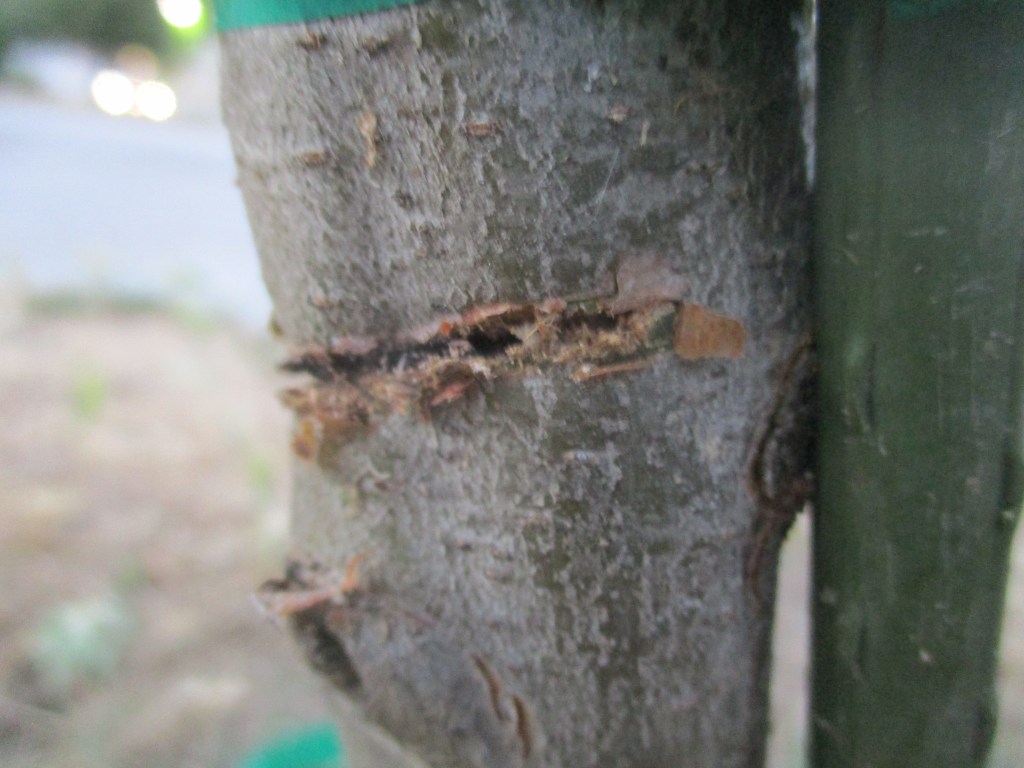
Last Wednesday, the Memorial Tree was observed to be askew and separated from its supportive stake, which seemed to be the sort of minor damage incurred by something as simple as a dog getting its leash tangled with it. However, as the tree was straightened and staked, three fresh saw cuts were observed in the trunk. Each cut severed the trunk about half way through.

A vandal is intent on depriving the Community of this Memorial Tree. That is what vandals do. They destroy assets, which are very commonly assets of Society. Of all the Memorial Trees in Felton Covered Bridge Park, this specific vandal specifically targeted the Memorial Tree that was contributed to Society by the Homeless of Felton, who innately have the least to contribute.

We will consult with the Santa Cruz County Parks Department this week about the future of this Memorial Tree or its potential replacement. However, the next Memorial Tree will likely be a Memorial Grove of several coast live oaks, perhaps with cedars to the east and west, in a less accessible but very visually prominent location near the western end of Mount Hermon Road.

Although the Memorial Tree initially seemed to be undamaged, three major cuts were found in the trunk.

Eviction Moratorium

There are no simple solutions to all the financial difficulties associated with the inability of so many to earn their normal income during this current situation with Coronavirus. So many of us simply can not afford what we could previously afford. Mortgages and rents are the most significant expenses for many who are now unemployed, so many of us will be unable to pay them.

The current eviction moratorium protects those who might otherwise be evicted from their homes or commercial properties for their inability to pay their mortgages or rents. However, it is no remedy for the disruption of revenue that those who own the mortgages or rental properties rely on. Many of them also need to pay mortgages and rents. Everyone has innate expenses.

It will take a while for those who own rental properties to recover from any lapse of revenue, but it will likely be easier than renting to new tenants while so few can afford to rent. Similarly, it will be easier for lending institutions to recover from delinquencies of mortgage revenue than to foreclose on so many properties simultaneously. It is no simple solution, but it likely helps.

The main advantages of eviction moratoriums are that fewer businesses will need to vacate commercial properties, and fewer people will become homeless. These are significant advantages! Homelessness is already a problem for those who are currently experiencing it. Society can certainly do without more functional and formerly gainfully employed people becoming homeless.

We are so fortunate to live within a society that is both very generous to those who lack homes, and proactive in facilitating the retention of homes for those who have them. Otherwise, more of us would likely be homeless soon. Recovery from this currently unpleasant situation will be a long and difficult process.

A New Surplus

Yellow summer squash is almost as abundant as zucchini.

Felton is certainly no place to go hungry in. The generosity here can be a bit overwhelming at times. Surplus of perishable food that must be frozen almost exceeds the capacity of the freezers that we use. Some of the non perishable food gets transferred to a somewhat well stocked pantry where it is shared with anyone in the Community who wants it, regardless of need.

Food distribution between 11:00 and noon on Thursday at Community Bridges still helps by providing more variety of food, but what is procured is shared amongst more significant groups. Some of us take what we get to share with those we work with, because some have not been working as much as they typically do lately. Nonetheless, there is still sometimes a bit of surplus.

Now, there is about to be a little bit more. The vegetable plants that some of us started in various small garden plots have been producing a few minor vegetables, and are just about to start producing more significantly. Even vegetable plants that got started late are catching up with a normal schedule now that days are longer and the weather is warming. It is that time of year.

Frequent harvest of zucchini promotes continual production.

Unfortunately, there could be a slight increase in the need for this minor bit of surplus at about the same time that it becomes available. So many in the Community who rely on tourism and associated industries for revenue will be earning less than normal during what should be the busiest season. Although more can return to work now, fewer tourists can afford to spend much.

Diminished revenue limits any expenditure on the necessities of life. A few of those who are so very generous to us might now benefit from the minor surplus that they helped us to generate.

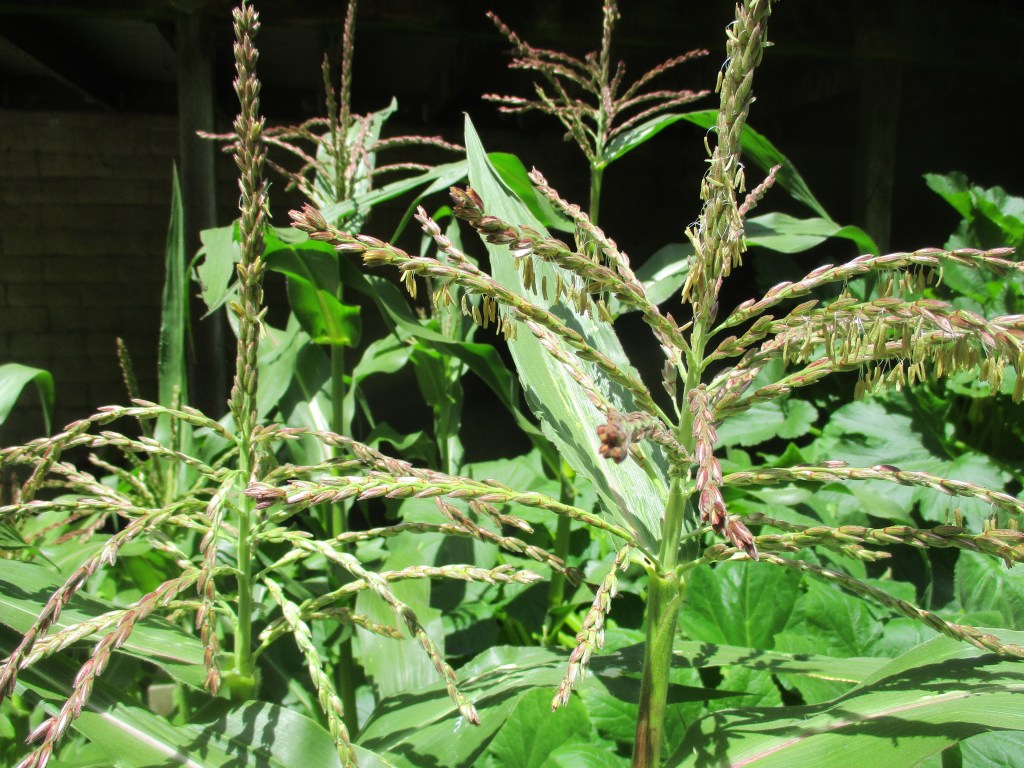
To enhance production, a few bits of corn tassel will get snipped to dust the silks.

Discrimination of Discrimination

Civilization has always been been influenced by various forms of discrimination. Even in modern America, where we like to believe that most types of discrimination have been dispelled, we are regularly reminded that some of the worst remain. Some forms of discrimination get recycled and reassigned, as if they will be more tolerable if applied to more appropriate victims.

Society can be rather discriminating about who it discriminates against.

People of African descent have always been discriminated against in America. Racists who justify such discrimination might consider them collectively to be more innately prone to thievery, as well as violence, vandalism, addiction, exploitation of social services, and any other social transgression that imaginative racists can conceive. It is what justifies racism and discrimination.

Historically, people of Asian descent, particularly Chinese descent, were collectively considered by racists to be more innately prone to addiction (to opium), as well as thievery and squalorly lifestyles. For a disgraceful period of American history, people of Japanese descent were incarcerated merely because they were racially related to enemies of America during World War II.

Many racists still consider Indigenous People of North America to collectively be more innately prone to alcoholism, as well as the many other transgressions that people of African and Asian descent are similarly blamed for. It is a common and typical pattern of racism and discrimination. Behavior that should be attributed to environment is instead attributed to genetics, or race.

It is easy enough to find pictures or other documentation of people conforming to the stereotypes of their respective racial designation. ‘Nature versus Nurture’ need not be mentioned if the objective is to justify racism and discrimination; although disproportionate conformation typically is mentioned. Justification of racism and discrimination rarely involves the use of any logic.

Now that racial discrimination is very slowly becoming less socially acceptable among common American society, some of those who might otherwise be racist are directing more unfounded hostility to other groups, such as those who are wealthier or more impoverished, including the homeless. Because this sort of discrimination is not racist, society is slightly more tolerant of it.

However, modern American society is realizing that unfounded discrimination against some of the homeless is merely a different flavor of the same recycled racial discrimination that is now so stigmatized. The irrational hostility and lack of logic eventually make it obvious. We have seen it all before, continue to see it, and sometimes see it in initially unrecognizable incarnations.

Out In Nature

The forest is doing well.

Felton has certainly changed since my grandparents arrived in the early 1940s. So many more homes have been built around their formerly isolated home on Ashley Street. A supermarket and two big drug stores are within walking distance of Downtown. There are more people and traffic here in Felton now than there were in Sunnyvale when they left.

Wow, Sunnyvale has certainly changed as well.

Yet, nature is still natural. The second growth redwoods are getting to be eighty years older than they were back then. So are some of the old oaks and firs. Otherwise, the forest and all the flora and fauna in it function now like they did back then.

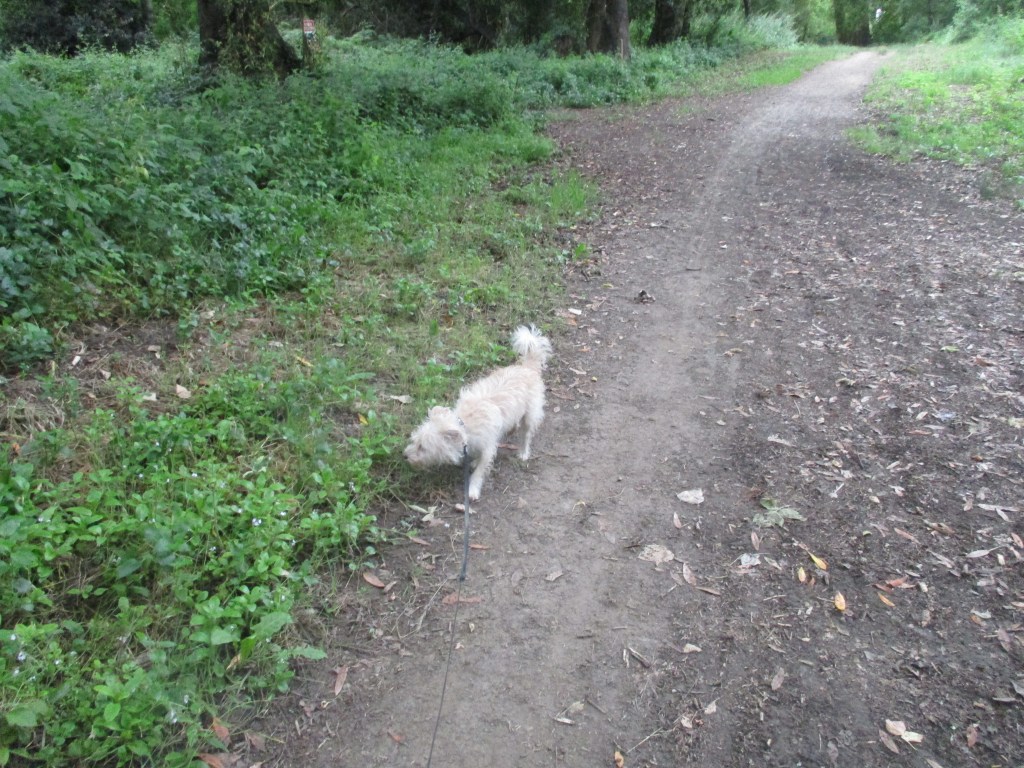
Dogs enjoy nature too.

It has been slightly more than a year since I wrote ‘Fake Environmentalism‘, about the misconception that homelessness is more detrimental to the environment than domestic lifestyles are. That article was more about how domestic lifestyles affect the environment in ways that few of us give much thought to, rather than the relatively minimal impact of homelessness.

We all have seen pictures of the most horrendous of homeless encampments, which are typically inhabited by those afflicted by functionality compromising mental disorder. Encampments such as these exemplify homelessness no more accurately than the White House exemplifies all domestic situations. They are rare, and still less polluting than average domestic lifestyles.

Most homeless encampments are not much to get pictures of. Many homeless people leave nothing where they sleep for the night, but instead take everything with them when they leave in the morning, even if they return at the end of the day.

I could see no evidence of encampments while walking with Rhody through an area where a few homeless people live. I might have found minor evidence if I had looked for it, but that was not my intention. If I had wanted to see evidence of human habitation, we would have walked on one of the several suburban streets in town.

Consider The Source

While most of us are willing to comply with social distancing standards, a few complain vehemently about it. Of these, some blame President Trump for the current situation. Some blame the Liberals. Some insist that it is a conspiracy to destroy the economy. Yet, they all lack the education and experience of those who developed and implemented the social distancing standards.

In other words, they do not know what they are talking about, but they all think that they are experts.

Understandably, many of us want to return to work! Many are frustrated by confinement and want to get out and about like we did prior to this situation. The rational among us do what we must until that is again possible. The irrational sort can potentially prolong this situation by noncompliance to social distancing standards. Society suffers the consequences of their ignorance.

The ignorance of those who lack practical experience with homelessness, but believe that they are qualified to make recommendations about it, is just as irrational. Although such ignorance is rare, we all have encountered it at one time or another. Those who express the most extreme of ignorance and irrationality are too ignorant and irrational to realize it. Consider the source.

For example, some have made the recommendation that homeless people should just relocate to where they would not be homeless, but do not reveal where such a place is. Some homeless people do relocate for a home that happens to be available. It would however be pointless to relocate to be homeless in an unfamiliar situation. Nor should anyone relocate to be unemployed.

How many of those who make such trivializing recommendation had been homeless, and tried to find a home without a deposit, exemplary credit, sufficient income or stable renting history? How many are even aware that many of the homeless lack a combination of these assets? What qualifies anyone lacking such relevant experience or insight to make such recommendations?

What About Everyone Else?

Life is difficult sometimes. It is certainly less difficult for some than it is for others. Nonetheless, no one gets through from beginning to end without some degree of difficulty. Those of us who have experienced significant difficulty may believe that others have better situations, and there are always many who do, but our perceptions of their respective situations really are limited.

Nowadays, many of those who have had better situations than some of us will be experiencing formerly unforseen difficulties. For many, such difficulties will be more stressful than for those of us who have experienced them previously. Most of us crave and strive for stability and security. Many had done well with achieving a better than average degree of stability and security.

So much of that is compromised or challenged now. Some of us with formerly stable employment have been unemployed for quite a while. Some will remain unemployed for a while longer. A few will be without employment to return to. Consequently, some will be unable to pay mortgages, rents and other important bills. Consequences of this are still unknown, but will be severe.

Our minor group has been fortunate for the past many years. So many who formerly lacked homes have procured domestic situations. So many who lacked employment are now lucratively employed. Fewer of us are utilizing the resources that were so helpful to so many more years ago. Fortunately, some of these resources are still available for a different demographic in need.

Hopefully, this current situation does not get as unpleasant as it has potential to. It is already very difficult for some, and in some regards, will likely get significantly worse before improving. Many of us are already doing what we can to help alleviate the severity of this major disruption of normalcy.